Why Wind Matters More Than Temperature on Your Patio in Fall
There is a point every fall when the forecast still looks promising. The sun is out. The temperature is mild. Your patio furniture is still outside. Then the wind picks up, and suddenly the patio does not feel nearly as inviting.
That is because temperature is only part of what determines how comfortable an outdoor space feels. Wind can increase how quickly your body loses heat, making a mild fall day feel much colder than the thermometer suggests.
For many patios, balconies, and covered outdoor spaces, the solution is not necessarily more heat.
Sometimes, it is simply less wind. .
Your patio may be more exposed than you think
Wind does not affect every outdoor space the same way. The amount of wind your patio receives can depend on:
- Which direction it faces
- Whether it is elevated
- Nearby homes, fences, trees, and buildings
- Open fields or exposed surroundings
- The shape of your home
- How wind moves around corners or between buildings
Lumon systems are designed around the conditions of the individual space. Wind pressure can vary depending on building height, location, glazing height, and exposure, so stronger components can be used where required.
Wind protection is not simply about putting up a sheet of glass. The system needs to be designed for the conditions it will face.

How Lumon Retractable Glazing Helps Reduce Wind Exposure
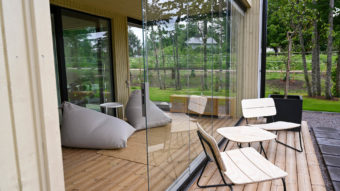
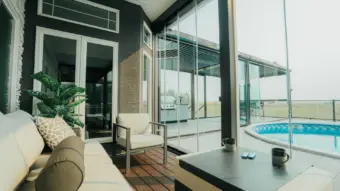
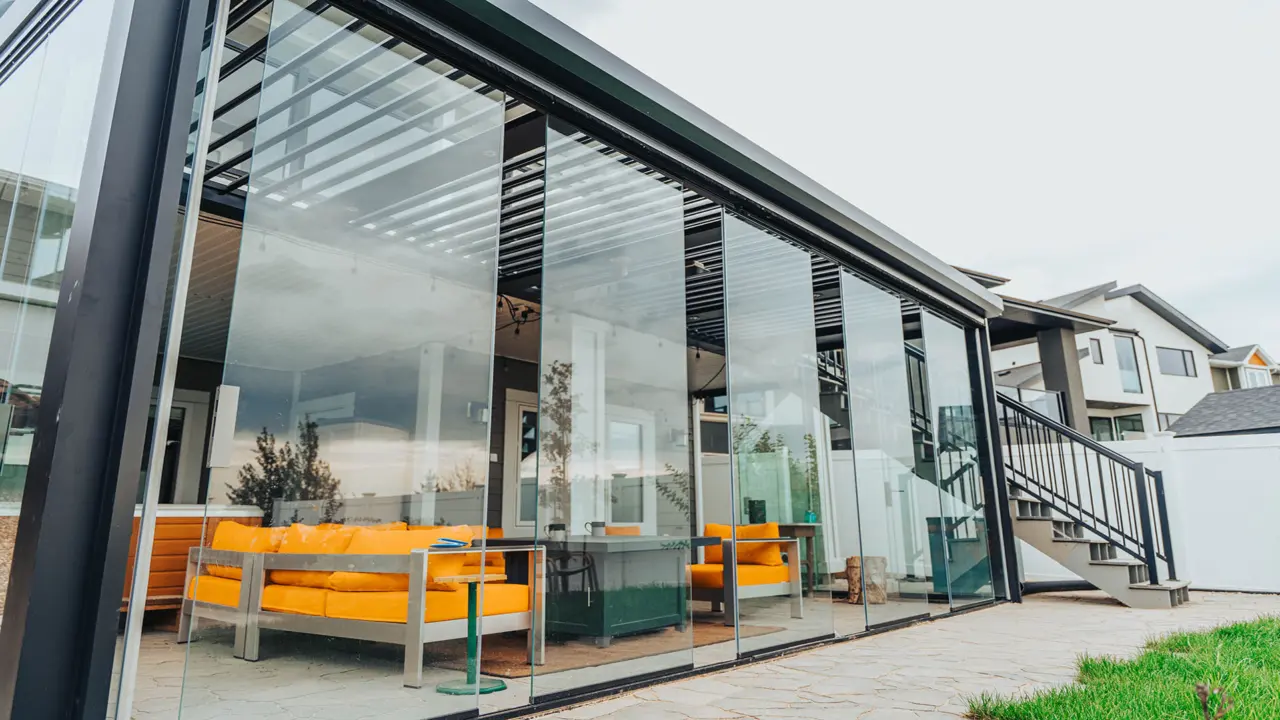
This is perhaps the simplest way to understand Lumon glazing. It acts as a windbreak that you can adjust as the weather changes.
When the wind is strong, the glass can be closed to reduce direct exposure. When conditions are mild, the panels can be partially opened. When the weather is beautiful, they can slide and fold away to open the space again.
That flexibility is particularly useful in fall, when conditions can change significantly within a few hours.
You might want protection from a cool morning breeze, an open patio during a sunny afternoon, and shelter again as the wind picks up in the evening.
With retractable glazing, you can adapt the space instead of choosing between permanently open and permanently enclosed.

What about wind-driven rain?
Wind affects more than temperature. It also changes how rain reaches your patio.
A roof can provide excellent protection from rain falling vertically, but once wind begins pushing rain sideways, water can still reach furniture, cushions, and seating areas. Glass walls provide an additional layer of protection from wind-driven rain.
Lumon glazing is a weather barrier that helps protect outdoor spaces from wind, rain, snow, dirt, and debris.
However, it is important to understand what the system is designed to do. Lumon glazing is not a completely watertight or airtight room.
There are small gaps between the glass panels to provide ventilation, and depending on wind direction and weather conditions, some rain or snow can enter. Lumon’s glazing system is a weather buffer rather than a sealed room. The purpose is greater protection from the elements while still keeping the patio an outdoor space.
Why does Lumon leave gaps between the glass?
At first, a small gap between glass panels may sound like a disadvantage, but it is actually intentional.
Lumon glazing is designed to remain naturally ventilated. The small spaces between panels allow air movement, which helps reduce condensation and allows balcony and building structures to dry properly.
This also reinforces the difference between a glass windbreak and a fully insulated addition.
With Lumon, you still have an outdoor environment. It is simply a more sheltered one.
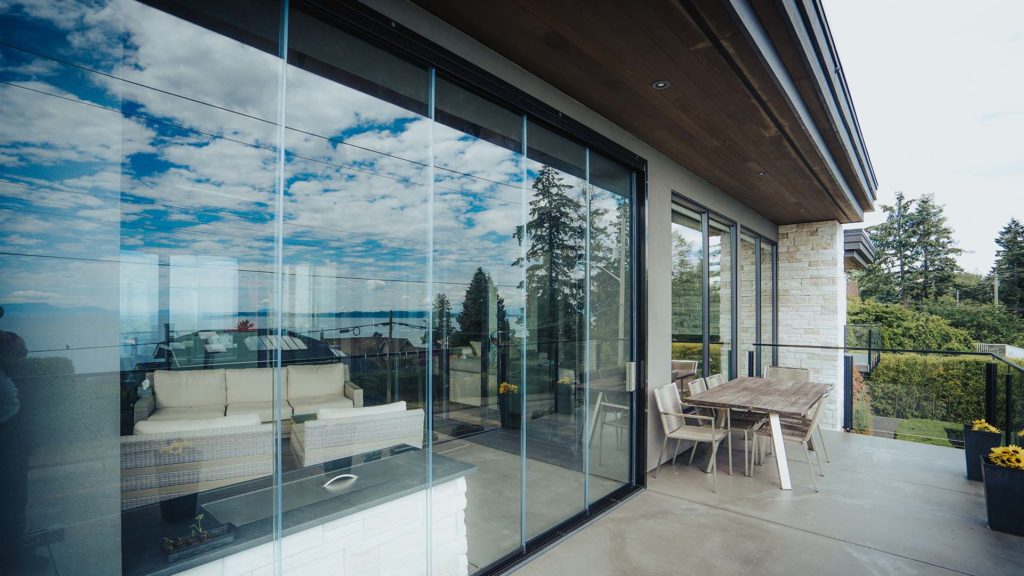
Built to handle wind, not just block it
There is another side to wind protection that homeowners may not immediately think about.
The glass itself has to withstand wind pressure.
Wind pressure is one of the key design considerations when specifying a glazing system, particularly on balconies and elevated spaces.
Depending on building height, location, glazing height, and exposure, stronger components can be specified.
Lumon glazing systems have also been evaluated by the Canadian Construction Materials Centre since 2012. The evaluation includes areas such as wind resistance, glass integrity, and guard and handrail safety in relation to Canadian building requirements.
That engineering matters because a windbreak needs to do two things: protect you from the wind, and safely handle the wind itself.
Open, Partially Open, or Closed
One of the main advantages of retractable glazing is the ability to adapt the space to changing conditions throughout the day. You are not enclosing the patio permanently. You are adjusting how much protection you want.
| Fall Conditions | How You Might Use Retractable Glazing |
|---|---|
| Warm and calm | Open the panels and enjoy the patio as usual |
| Mild with a light breeze | Partially close the glazing on the exposed side |
| Cool and windy | Close the panels to create a stronger windbreak |
| Wind-driven rain | Close the glazing for greater side protection |
| Sunny afternoon after a cold morning | Open the panels again as conditions improve |
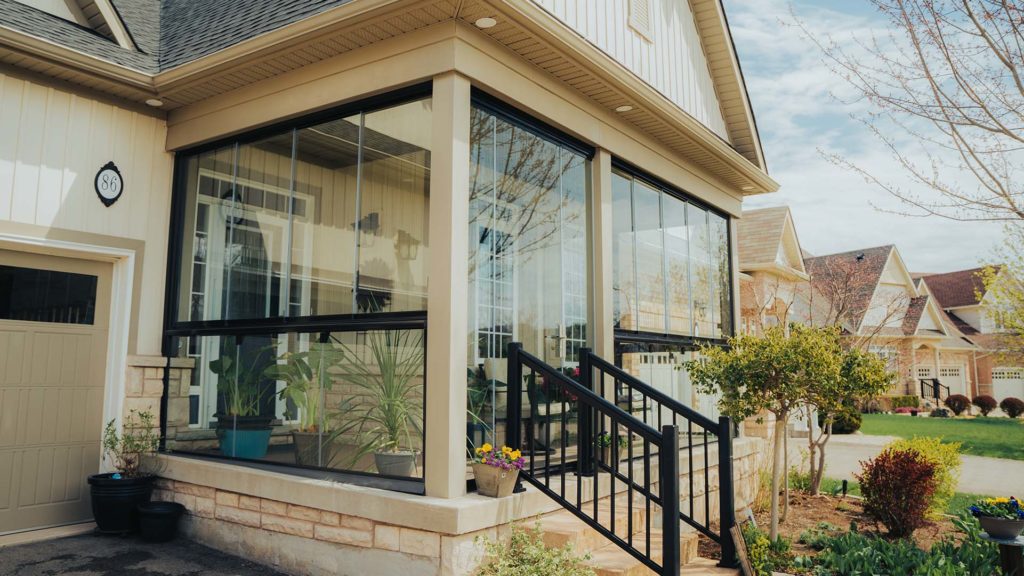
A few other ways to make your patio more comfortable this fall
Wind protection can make a significant difference, but it works even better when combined with a few simple fall updates.
Consider:
- Positioning seating away from the most exposed side
- Adding outdoor rugs, cushions, and throws
- Taking advantage of afternoon sunlight
- Using warmer outdoor lighting as the days get shorter
- Keeping leaves and debris out of glazing tracks and drainage areas
- Using an outdoor-rated heater where appropriate
- Closing only the panels you need, while keeping other areas open for ventilation
The goal is not to make your patio feel exactly like your living room. It is to create a comfortable outdoor space that you can continue enjoying as the seasons change.
Fall weather doesn’t always mean patio season has to end. By reducing wind exposure while maintaining flexibility, retractable glazing can help make outdoor spaces more comfortable through changing conditions. Whether panels are open, partially open, or closed, the goal remains the same: helping homeowners enjoy their patios longer without permanently enclosing them.
Ready to make more of your patio? Ask Lumon for an estimate and explore the right glazing solution for your space.