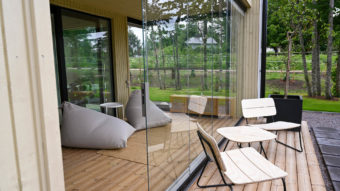
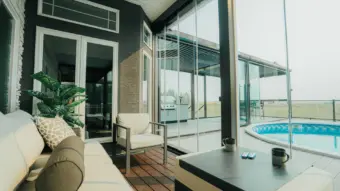
The Power of Ventilation in Outdoor Spaces
You open a window and call it ventilation; your home deserves better.
Quick answer
Good ventilation makes an enclosed outdoor space more comfortable and usable. Lumon’s retractable glass panels allow you to adjust how much fresh air enters your patio, balcony or sunroom while still providing shelter from changing weather. That flexibility can help prevent a space from feeling hot or stuffy and makes it easier to use for dining, entertaining, exercise, working, gardening, or simply relaxing.
Ventilation is one of the most underrated qualities in any enclosed space. It’s the line between a room that feels alive and one that feels stale—a space you linger in versus one you leave too soon. Yet for most homeowners, airflow rarely comes first.
That’s worth reconsidering. Because when you have genuine control over the ventilation in a space; the ability to open it fully, close it completely, or find any point in between. When you have adequate ventilation in your outdoor space, the range of things that space can comfortably do expands dramatically.
A Lumon retractable glazing system can put you in control of the air inside it, and the difference is airflow in a space that breathes, while protecting from the weather.
Why Ventilation Changes Everything
Most of us have experienced both ends of the spectrum without naming what we were experiencing. A sealed glass conservatory on a warm afternoon—stuffy, overheated, uncomfortable—drives people back indoors within minutes. A well-ventilated outdoor room on the same afternoon, with a breeze moving through and the temperature sitting just right, keeps people there for hours.
The research on what fresh air actually does to the people inside a space is compelling. Studies show that breathing fresher air reduces cortisol, which is the body’s primary stress hormone. This boosts mental clarity, and improves emotional regulation.
Poor ventilation, on the other hand, allows CO₂ to build up, which directly suppresses focus, mood, and cognitive function. The discomfort you feel in a stuffy room isn’t imaginary. It’s physiological.
- 61% higher cognitive function scores in well-ventilated spaces vs. poorly ventilated ones
- 5 minutes of time near green space is enough to produce measurable improvements in mood and self-esteem.
- 10% average increase in productivity linked to improved indoor air quality in workplace studies
Traditional glass enclosures often fail precisely here. Sealed units trap heat and stale air, making the space feel pleasant in theory but suffocating in practice. The advantage of a retractable system is that ventilation is never fixed—it’s a dial, not a switch. On cool days the panels stay closed and the space stays warm. On warm days they open fully and the outdoor air moves through freely. On the days in between, any degree of opening is possible. That flexibility is what makes the space genuinely livable across the full range of conditions a Canadian climate offers.

Hosting Without the Compromise
There’s a particular frustration familiar to anyone who entertains outdoors in Canada: the meal that starts in warm sunshine and ends with everyone retreating inside because the temperature dropped, the wind picked up, or the rain arrived uninvited. A glazed, ventilated outdoor space removes that variable almost entirely.
With the panels partially open, a gentle airflow keeps the space comfortable without the exposed chill of a fully open terrace. With the panels closed, the temperature stays stable regardless of what’s happening outside. And on genuinely warm evenings, opening the panels fully makes the space feel exactly like what it is: an outdoor room that happens to have glass walls when you need them.
A ventilated glazed space gives you control over the conditions of the evening. Not the weather, but the conditions. That’s a meaningful distinction.
Ventilation also matters for outdoor cooking. When barbecuing or cooking in a semi-enclosed space, airflow is the factor that manages smoke, heat, and cooking odours; keeping the experience comfortable for everyone rather than driving guests to the edges of the space. A retractable system allows you to dial up the ventilation precisely when cooking is underway and dial it back when the food is on the table and the evening settles. This is one of the practical advantages of retractable panels over fixed enclosures that often goes unmentioned but makes a real difference in day-to-day use.

A Better Environment for Moving Your Body
Fresh air and exercise have a relationship that goes beyond the obvious. Research into what scientists call “green exercise”—physical activity in or near natural environments—consistently shows that training with access to fresh air, natural light, and views of greenery produces better outcomes than equivalent exercise indoors: greater enjoyment, longer sessions, lower perceived exertion, and stronger mood improvements afterward.
A ventilated sunroom sits in a unique position between a fully indoor gym and a fully outdoor training space. With the panels open on warm days, the space is functionally outdoors—fresh air moving through, the sounds of the garden present, natural light unfiltered. On cooler days, the panels close and the space remains warm and sheltered, but the connection to nature through the glass stays intact. That’s an environment no basement gym or spare room can replicate.
For yoga and meditation specifically, the combination of proximity to nature, natural light, and controllable fresh air creates a setting that supports the practice in ways a standard indoor room cannot. The changing quality of light across a morning session, the option to open the panels and let the garden sounds in—these are details that seem small but accumulate into an environment that makes showing up for practice easier and more rewarding.

The Outdoor Home Office
Remote and hybrid work have made the quality of the home working environment a genuine productivity variable rather than a personal preference. And one of the clearest findings from research into home office performance is that air quality is a significant factor—one that most people are unknowingly compromised by every day.
In a closed room, CO₂ levels rise steadily over the course of a working day as the space is used and air circulates less. Research from Harvard’s Healthy Buildings programme found that the productivity benefits of enhanced ventilation far exceed the costs—in one analysis, doubling the ventilation rate produced cognitive performance improvements equivalent to over $6,500 in extra productivity per person per year, at an energy cost of less than $40 per person annually. Fresh air, in other words, is one of the cheapest and most effective performance upgrades available.
The natural light element compounds the air quality benefit. Exposure to daylight throughout the working day regulates circadian rhythm, supports alertness in the afternoon, and improves sleep quality at night, which feeds back into next-day performance. A glazed outdoor workspace delivers both variables consistently, across all seasons and weather conditions.

Growing a Garden in a Ventilated Space
Plants thrive in ventilated spaces for the same reasons people do: fresh air, natural light, and temperatures that don’t swing to extremes. A glazed outdoor space with retractable panels is an environment that many plants respond to far better than a sealed conservatory or a standard indoor room — and the benefits run in both directions.
The presence of plants in a space people spend time in has measurable effects on wellbeing. Research cited by WebMD notes that many plants release organic compounds called phytoncides into the air that appear to support immune function — and that even simple plant presence in a room reduces anxiety and stress compared to equivalent spaces without greenery. The combination of ventilation and planting in a single space creates something closer to the biophilic environments that research consistently links to reduced cortisol, improved mood, and better cognitive performance.
From a practical standpoint, a ventilated glazed space can function as a greenhouse for starting seedlings in spring, a protected growing space for tender plants that wouldn’t survive a Canadian winter outdoors, a potting and gardening room, or simply a green-filled retreat that blurs the line between interior and exterior in the most pleasant way possible. The retractable panels mean humidity and airflow can be managed precisely; something a fixed glass enclosure cannot offer.

Being Outside, Without The Exposure
Not every use of a ventilated outdoor space needs to be purposeful. Sometimes the most valuable thing a space can offer is a reason to slow down: a place to sit with a coffee in the morning before the day begins, or to decompress in the evening without the competing demands of the interior of the home.
The research on what time near nature does to our mental state is remarkably consistent. McLean Hospital summarizes attention restoration theory: the idea that natural environments allow us to exercise involuntary attention, giving our voluntary attention systems a genuine rest. The result is a reduction in mental fatigue, improved focus when we return to demanding tasks, and a general sense of restoration that accumulates meaningfully over time with regular exposure.
- Morning ritual: Fresh air and natural light before the day begins, with panels cracked for a breeze
- Afternoon reading: Sheltered, never stuffy, and comfortable whatever the weather outside
- Evening unwind: Panels partially open, temperature comfortable, the garden still present
- Quiet meditation: Near nature without the exposure—the ideal conditions for stillness
- Nature connection: Daily proximity to greenery and fresh air without leaving the property
- Rainy day retreat: The sound and sight of rain with none of the discomfort, with panels closed
A rainy afternoon in a glazed outdoor space with the panels closed deserves a special mention. The sound of rain on glass, the view of the garden in wet weather, the sense of being simultaneously sheltered and outside. It’s a genuinely restorative experience that a sealed indoor room simply cannot offer. It’s one of those small daily pleasures that owners of retractable glazing systems mention consistently, and one that’s hard to fully appreciate until you’ve had it.
Control Is the Point
A ventilated outdoor space isn’t a compromise between indoors and outdoors. It’s something better than either. The ability to open fully, close completely, or find every point in between is what makes all six of the above genuinely possible: dining, fitness, working, gardening, and simply resting—across every season and in almost every weather condition Canada has to offer.
That control starts with the right glazing system. Lumon’s retractable panels are designed to give you exactly that; the infrastructure that makes year-round outdoor living not just possible, but easy.
What you do with the space inside it is entirely up to you.