
How Much Space Does a Glazing System Take Up?
Here’s what you need to know before you plan.
Quick answer
A retractable glazing system takes up relatively little usable space. Lumon uses slim floor and overhead tracks, while the glass panels stack compactly at the side when opened. Because the system uses clear, frameless glass, it can actually make an outdoor area feel larger by preserving natural light and uninterrupted views. The main space to plan for is the small panel-stacking area at the edge of the enclosure.
It’s one of the first questions homeowners ask, and the answer is almost always more reassuring than expected. A quality retractable glazing system has a minimal footprint—and almost always makes a space feel larger, not smaller. The details matter.
Space is one of the first things people think about when balcony or patio glazing comes up. Concern makes sense: you’ve worked hard to create an outdoor space you enjoy, and the last thing you want is a system that eats into your usable floor area, blocks the view, or makes everything feel more enclosed than it did before.
How to Maximize Room Size with Slim Profile Glazing
The good news is that the physical footprint of a well-designed glazing system is considerably smaller than most people anticipate — and its effect on the perceived size of a space is almost always the opposite of what people worry about. Understanding both of those things clearly is what allows you to plan with confidence rather than hesitation.
What “Space” Actually Means in the Context of Glazing
When homeowners ask how much space a glazing system takes up, they’re usually thinking about one of three things, and sometimes all three at once. It helps to separate them, because each has a different answer.
- Floor Space: The actual floor area occupied by tracks, panels, and hardware at ground level
- Visual Space: How large, open, or enclosed the space feels once glazing is in place
- Functional Space: How much of the space remains practical for furniture, movement, and everyday use
These three factors pull in different directions. For example, a system can have a small physical footprint but still feel visually heavy if the frames are thick and the glass is tinted. Conversely, a frameless, clear glass system with a slim floor track occupies measurable physical space while making the whole area feel dramatically more open. Understanding which dimension concerns you most helps clarify what to look for in a system.
The Physical Footprint
What the Hardware Actually Occupies
A retractable glazing system like Lumon’s consists of a few key components: a floor track, the glass panels themselves, and an overhead fixing point or top guide. Each occupies space, but none of them in a way that meaningfully reduces your usable area.
The floor track is the component people most often wonder about. In a quality system, this is a slim, low-profile channel that sits flush with or very close to the existing floor surface. It’s wide enough to guide the panels reliably but narrow enough that it integrates naturally with most decking, tile, and composite surfaces without creating a trip hazard or an obvious visual interruption.
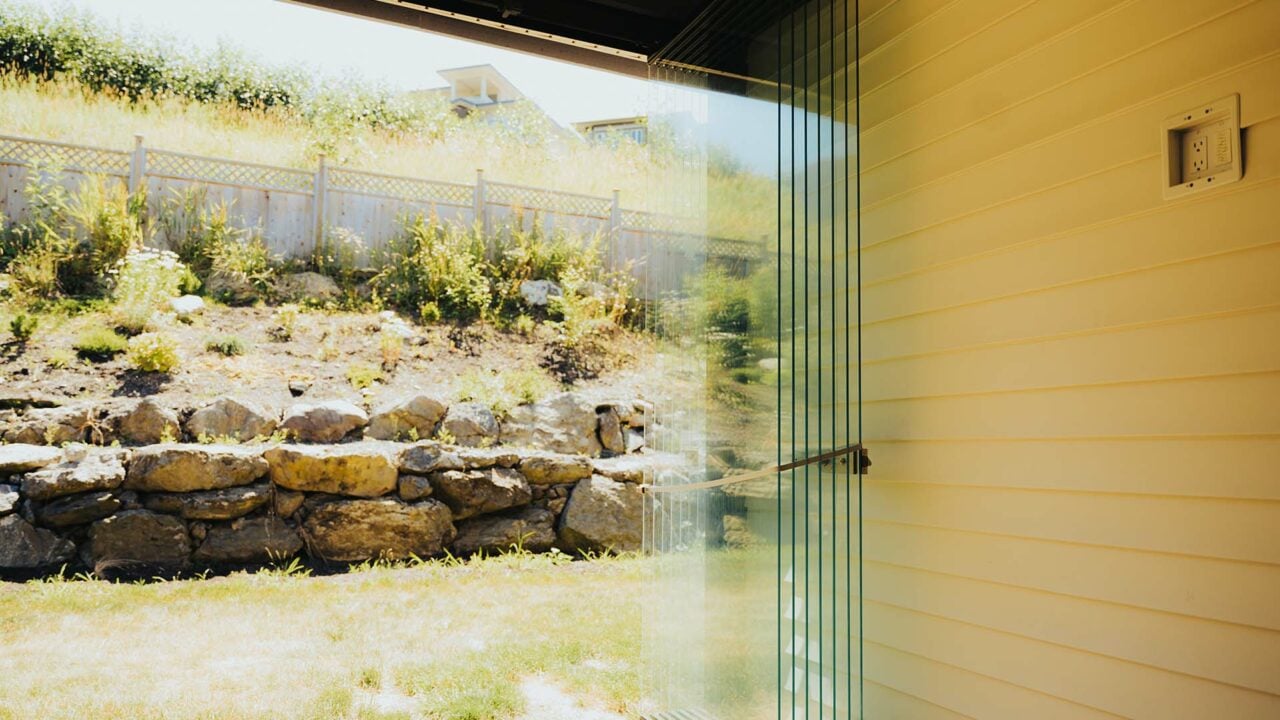
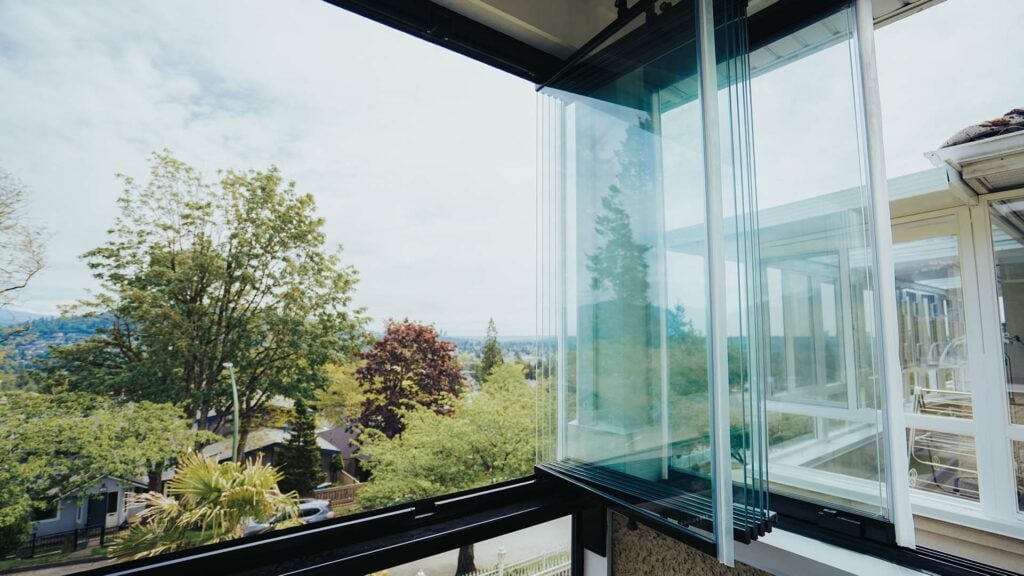
The glass panels themselves are the most visible component. When they’re open, their presence is concentrated at one end of the space, where they stack neatly together. The stacked panels do occupy a section of the perimeter, and this is worth factoring into your furniture placement. In practice, the stacked width of a set of panels is compact enough that it rarely conflicts with how most people use the space — but it’s a detail worth discussing during a design consultation, so your layout accounts for it from the start.
Overhead fixings and top guides are typically slender aluminum profiles that run along the ceiling or soffit line. Their visual presence is minimal, and in many installations they’re barely noticeable once the system is in use.
Does Glazing Make a Space Feel Bigger?
This is the concern that sits behind most questions about space, and the answer, perhaps counterintuitively, is almost always yes.
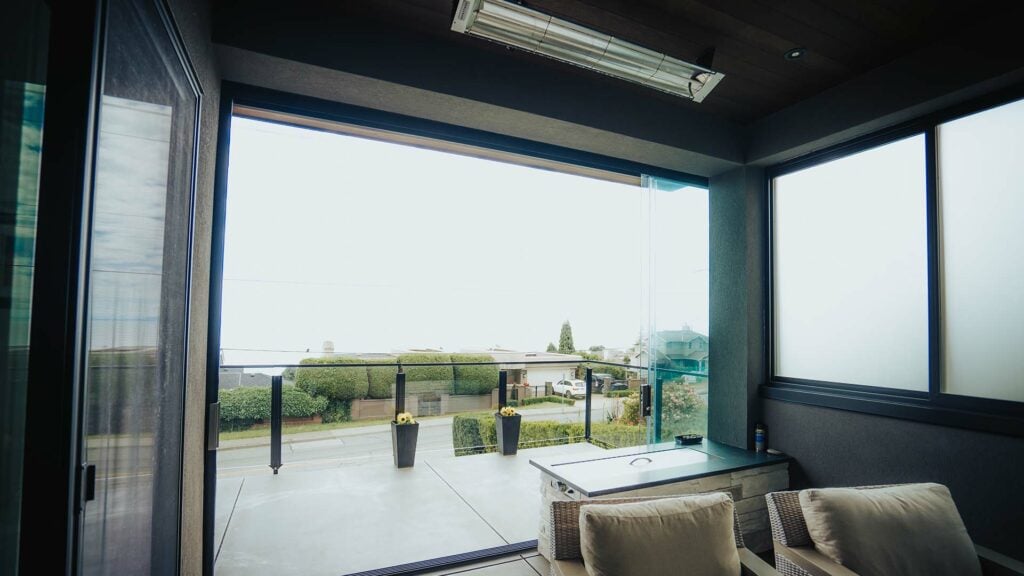
Natural light is the key variable. Research consistently shows that spaces flooded with natural light feel more open, more comfortable, and more generously proportioned than equivalent spaces with limited daylight. A glazed enclosure that replaces a solid wall or a heavy screen with clear, full-height glass doesn’t reduce light; it manages and directs it while keeping the view intact. The garden, the skyline, or the surrounding landscape remains visible through the glass, maintaining the psychological sense of openness that makes a space feel larger than its measurements.
The difference between a frameless glazing system and a traditional framed enclosure is particularly significant here. Heavy aluminium or timber frames interrupt the sightline at regular intervals, breaking up the view and making the enclosure feel more present — more like a room with walls than an extension of the outdoor space. A frameless system removes that interruption almost entirely. The glass becomes nearly invisible, and the boundary between inside and outside dissolves in a way that feels genuinely expansive rather than contained.
Open vs. Closed: Two Spaces in One
One of the most underappreciated qualities of a retractable glazing system is that it offers two distinct spatial experiences from the same footprint. When the panels are open, the space is fully connected to the outdoors — fresh air, direct sun, the sounds of the garden. When they’re closed, it becomes a sheltered, light-filled room that reads as an extension of the interior.
Most fixed enclosures offer only one of those experiences. A retractable system gives you both, and the transition between them takes seconds.
Minimum and Maximum Space Requirements
One of the most practical questions in glazing planning is whether a space is large enough for glazing. Or, occasionally, whether it’s too large for a standard system. The answer on both ends is more flexible than most people expect.
On the smaller end, compact balconies—particularly in urban condo and townhome settings—are among the most common spaces that benefit from glazing, and systems are specifically designed to work at that scale. The minimum viable width for most glazing systems is determined by the panel dimensions and the hardware requirements rather than an arbitrary size threshold. A professional site assessment is the most reliable way to confirm what’s achievable for a specific space, since the combination of width, depth, ceiling height, and structural fixings all interact.
On the larger end, retractable glazing systems are fully scalable. Large patios, wraparound terraces, and multi-bay configurations are all well within reach, and corner solutions allow glazing to turn angles without requiring a structural break in the enclosure. The planning considerations become more involved at larger scales—more panels, more stacking space to account for, potentially more structural assessment required. But the principle remains the same.
Planning Your Space Around a Glazing System
Once you understand the physical and visual footprint of a glazing system, the practical question becomes how to plan the rest of the space around it. A few considerations make a meaningful difference to how well the finished result functions day to day.
The stacking zone is the most important spatial factor to plan for. When panels retract, they gather at one end of the opening and that end of the space needs to be clear of furniture and fixed features that would obstruct the movement. In most outdoor spaces this is straightforward to accommodate, since the stacking zone typically falls against a wall or in a corner that wouldn’t be prime furniture territory anyway. But it’s worth confirming during the design process so there are no surprises after installation.
The floor track integration is worth discussing with your installer if you have an existing surface you want to preserve. In most cases, the track can be fitted to work with the existing decking, tile, or concrete without requiring a full resurface—but the method varies by material, and knowing this in advance allows you to plan accordingly.
Beyond those two details, planning a glazed outdoor space is largely the same as planning any outdoor room. Furniture should face the view, lighting should account for evening use, and the layout should reflect how you actually intend to use the space — whether that’s a dedicated dining area, a relaxed lounge setup, or a flexible arrangement that shifts between both. Glazing is the infrastructure that makes year-round use possible. What you do with the space inside it is entirely up to you.
The space a glazing system takes up is, in the end, a small trade for what it gives back. A slim floor track, a neat stacking zone, and slender overhead fixings in exchange for a year-round outdoor room that feels open, connected, and genuinely larger than its measurements. For most homeowners who make the investment, the question of how much space it takes up stops feeling relevant very quickly—because the space it creates is so much more valuable than the sliver it occupies.
See What’s Possible With Lumon
A Lumon home consultation is the most effective way to work through all of these considerations for your specific space. The assessment covers the physical dimensions, the structural requirements, the configuration options, and the practical planning details—giving you a clear picture of exactly what’s possible before any decisions are made.
-

Patio Covers vs. Retractable Glazing for Hospitality
Read more…Your patio generates revenue, but only when guests are actually sitting in it. A short patio season can mean only four or five months of active use, while the space continues to incur operating costs throughout the year.
-
-

A Developer’s Guide to Retrofitting Aging Condos
Read more…Canada’s aging condo towers are hitting a turning point: the envelope, not the floor plan, now drives renovation decisions. Rather than a burden, façade modernization is a chance to give buildings more flexibility and control over how they perform and hold value.