
How Balcony Glazing Reduces Urban Noise in Ontario
Balcony glazing is Ontario’s answer to urban noise problems.
Urban noise is fast becoming one of the most pressing design challenges in Ontario’s high-density residential developments. As the province’s intensification push continues to accelerate, it’s a problem the industry can no longer afford to ignore.
Ontario’s development pipeline is increasingly aligned with transit-oriented communities, with projects concentrated around major transit infrastructure, as outlined by Infrastructure Ontario.
At the same time, CMHC data reported by CBC News shows a broader shift toward higher-density, multi-unit housing across Canadian cities. These conditions are placing greater emphasis on managing environmental noise in both design and approvals.
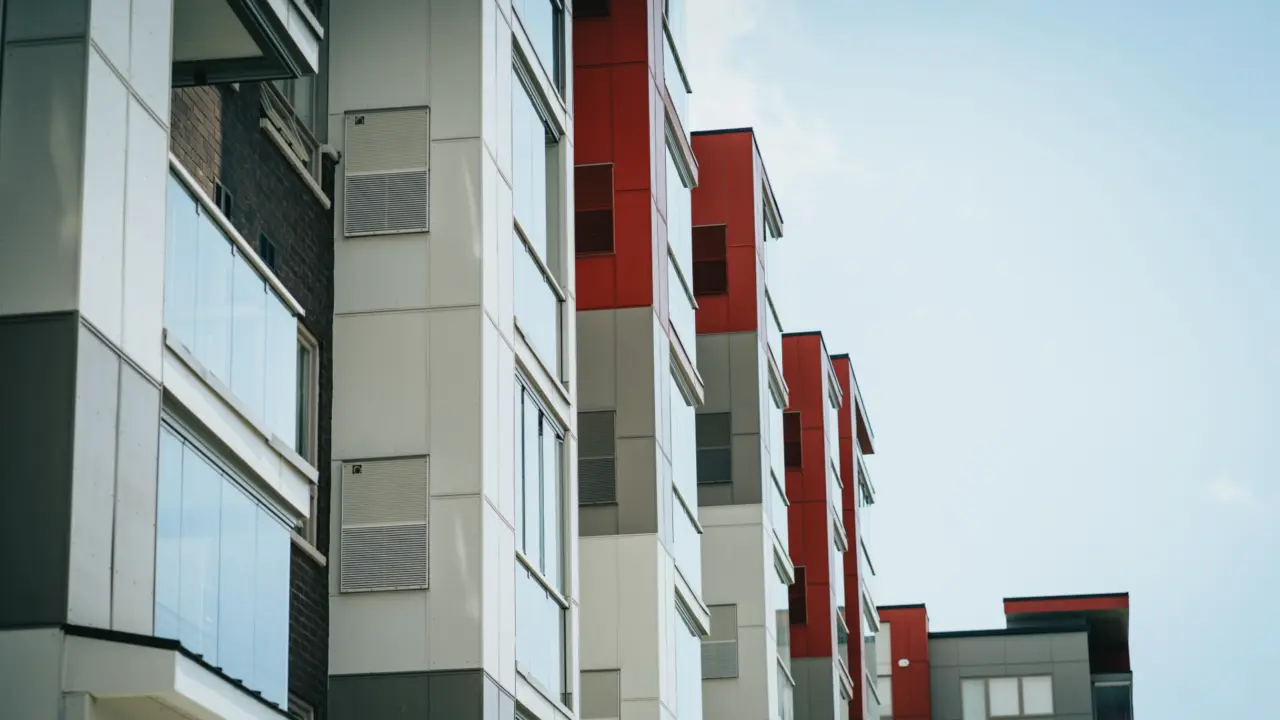
Balcony glazing systems, such as those developed by Lumon, are increasingly being considered as a part of this strategy.
Why balcony glazing by Lumon is gaining traction
- Reduces perceived noise exposure
- Improves year-round balcony usability
- Supports compliance in noise-sensitive sites
- Enhances resident comfort and satisfaction
By reducing perceivable noise within the balcony by up to 13 dBA, glazing acts as an acoustic buffer to help developers meet stringent noise regulations, which means staying ahead of project deadlines and optimizing their budgets. This level of reduction is more than double what most people can clearly perceive, making a noticeable difference in how usable and comfortable a balcony space feels.
The Government of Ontario has approved 1.5 million more homes to enter the construction pipeline in Toronto by 2050 as reported by CBC News. This pipeline will include hundreds of projects where noise shapes every meaningful design decision. Now, more than ever, developers need a tool to mitigate noise pollution, so their projects don’t face lengthy delays waiting for approval.
This shift is already influencing how projects are designed, evaluated, and approved across Ontario.

Ontario Association of Architects Annual Conference 2026
Our Takeaways on Balconies & Noise Reduction
This May, we attended OAA 2026 in Kitchener-Waterloo, the annual conference for architects across Ontario, to learn and listen from leading industry voices.
From what we observed, the industry has accepted noise, livability, and land-use compatibility as roadblocks that come with high-density building. Now, the question now is how to approach it from an architectural perspective.
Here are our key takeaways from OAA 2026.
1. Balancing Regulations with Balcony Usability
In Ontario, the NPC-300 establishes provincial limits on noise exposure for residential developments. NPC-300 designates many of those planned construction sites listed earlier as Class 4 areas, permitting noise thresholds of 60 dBA during the day and 55 dBA at night.
As Mark Levkoe, Principal Engineer of Valcoustics explained during his talk at OAA, Balcony Glazing & Acoustic Benefits for Apartments, municipalities and developers are “increasingly required to address ‘land-use compatibility’ issues between sensitive residential buildings and existing noise-generating uses.”
However, what NPC-300 doesn’t take into consideration is what buyers in the market want from their homes. This creates a gap between regulatory compliance and actual resident experience. While it measures regulatory compliance, it doesn’t consider livability in the outcome or how buildings actually stack up once they are lived in.
Many projects that meet these guidelines deliver balconies residents don’t use, amenity spaces they don’t feel drawn to, and units that become storage units before long.
Takeaway: Finding a way to balance provincial regulation compliance with creating spaces that people want to live in will be critical to the success of future developments.
2. Windows and Façades Are Not Enough
Traditionally, acoustic mitigation has meant developers focusing their budget on higher-grade windows to block noise out.
But we’re seeing a gap between noise attenuation and urban livability. There are still other factors, like temperature, wind exposure, and other elements that impact urban compatibility.
As a result, developers are now looking for solutions that address both indoor and outdoor living conditions rather than treating them separately.
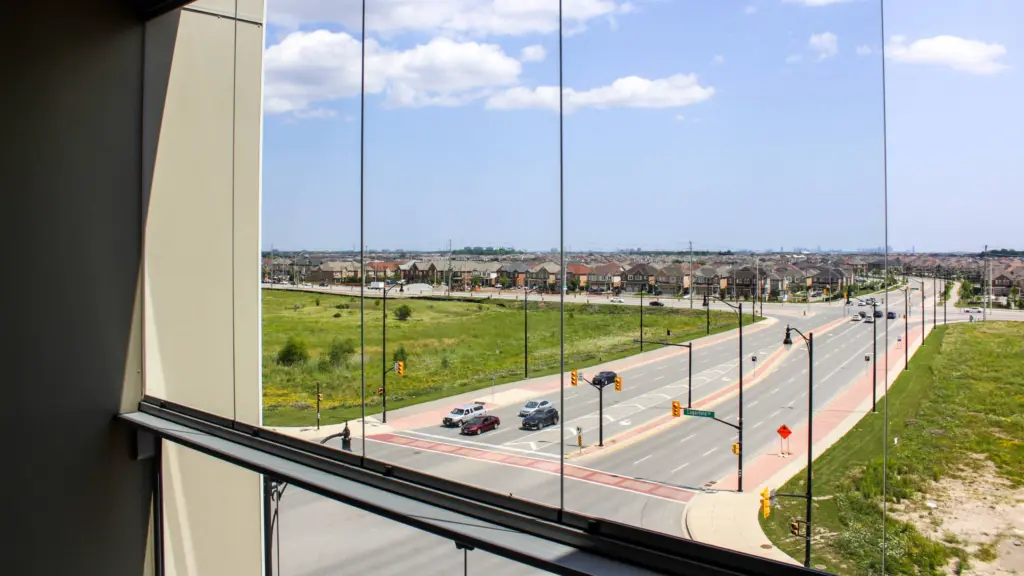
What distinguishes Lumon’s balcony glazing systems from other solutions is evidence. On top of third-party in-situ acoustic measurements on live projects, resulting in noticeable differences of up to 13 dB in noise reduction, Lumon’s tempered glass is tested routinely for wind load capacity.
Takeaways: As communities across Canada, specifically Ontario, continue to densify, having an environmental buffer that shields balconies from both wind and noise will prove to set projects apart in the market.
3. A Different Way to Frame the Balcony
Rather than treating it as an aesthetic architectural feature, or a code requirement, architects are approaching it as an acoustic buffer zone right from the design stage.
What this means is that it can act as an additional layer that helps reduce exterior noise exposure before sound reaches the residential façade. Effectively, it turns something as simple as balcony space into a high-performance system capable of acoustic mitigation, weather protection and resident comfort.
When sized and coordinated as part of the envelope strategy from the outset, balcony glazing performs better structurally, acoustically, and financially than a system added later on into the project as a mitigation measure.
Takeaways: Planning ahead now and integrating acoustic mitigation measures into your project from the design stages means more efficient spending of time, effort, and budget allocation compared to doing it after the fact.

Building for the Next Decade of Ontario
Architects are reframing exactly what they need from their balconies. As Mark Levkoe observed following his talk at OAA:
“A key theme from the session was that the conversation is shifting. Architects are moving beyond questioning whether noise is an issue and are now focused on how to design for it effectively.”
Lumon provides balcony glazing systems for new construction across Canada. Our senior team partners with architects and developers right from the start of projects, when the decisions with the most impact on noise reduction and livability are made.
Projects that address noise proactively at the design stage will be better positioned to meet both regulatory requirements and market expectations.
Planning a transit-oriented or noise-sensitive development? Connect with the Lumon PRO team to explore how balcony glazing can support your acoustic and design strategy from the outset.
Read more Professional Insights
-

Patio Covers vs. Retractable Glazing for Hospitality
Read more…Your patio generates revenue, but only when guests are actually sitting in it. A short patio season can mean only four or five months of active use, while the space continues to incur operating costs throughout the year.
-

A Developer’s Guide to Retrofitting Aging Condos
Read more…Canada’s aging condo towers are hitting a turning point: the envelope, not the floor plan, now drives renovation decisions. Rather than a burden, façade modernization is a chance to give buildings more flexibility and control over how they perform and hold value.
-

What Architects Should Know About Outdoor Glass Systems
Read more…Outdoor glass systems are landing in briefs faster than most practices have developed a spec position on them. Clients are increasingly seeking year-round outdoor usability, while developers see enclosed outdoor spaces as a way to differentiate projects. These requirements are now being raised during schematic design, and that’s exactly when you can’t afford to wing it.