
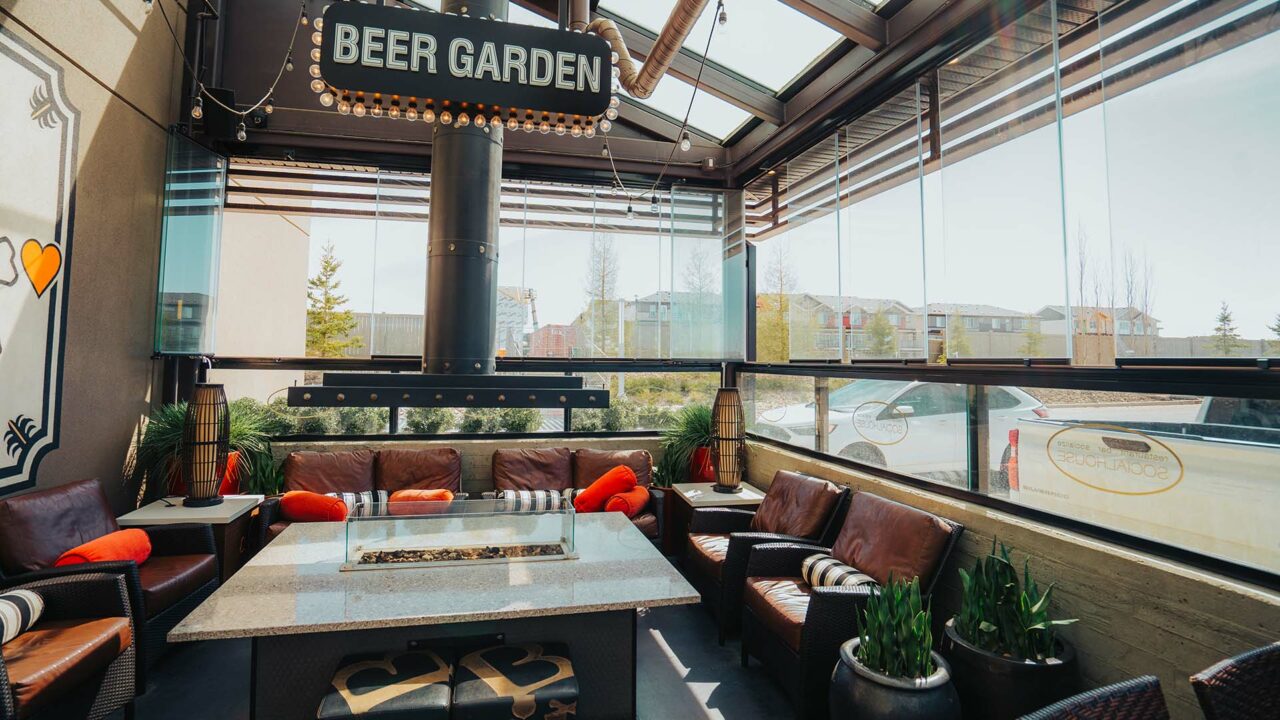
Patio Covers vs. Retractable Glazing for Hospitality
Here’s what you’re actually comparing for your patio.
Your patio generates revenue, but only when guests are actually sitting in it. A short patio season can mean only four or five months of active use, while the space continues to incur operating costs throughout the year.
Most restaurant owners and commercial operators know this problem well. The question is what to do about it.
Across many Canadian markets, restaurant patios are heavily impacted by rain, wind, shoulder seasons, and shorter outdoor dining periods. As a result, operators often look for ways to maximize the utilization of outdoor seating beyond the peak summer months.
The default answer is a patio cover. It’s affordable, fast, and it feels like a practical solution. Retractable glazing is often considered a different category of investment: a premium upgrade, a bigger capital commitment, something for a different kind of budget.
While both solutions serve different purposes, retractable glazing often provides greater revenue-generating potential for hospitality operators.
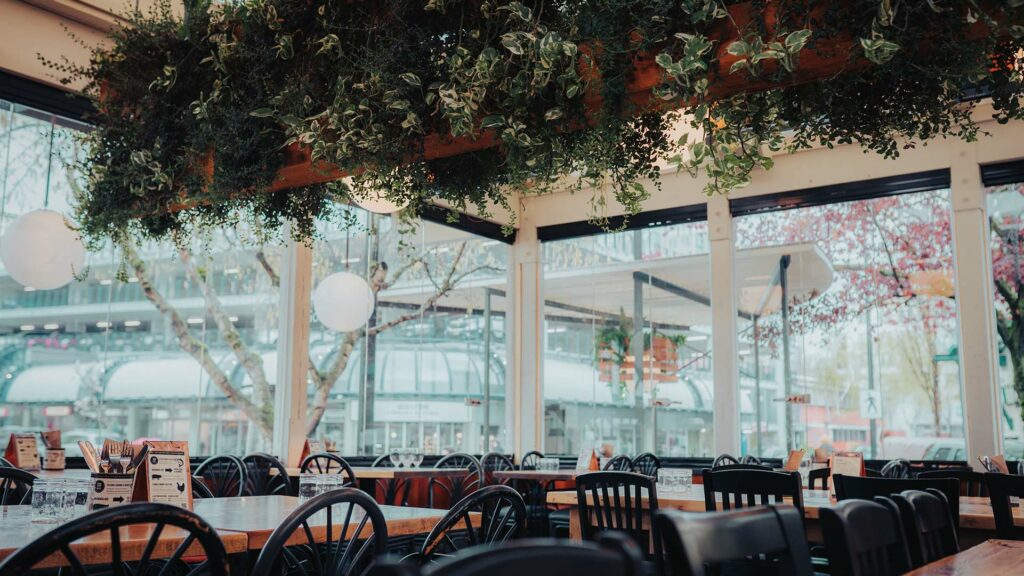
Patio Covers vs. Retractable Glazing: What You’re Actually Comparing
Whether you’re evaluating a restaurant patio enclosure, commercial patio enclosure, or a patio season extension solution, it’s important to understand the differences between a patio cover and a retractable glazing system.
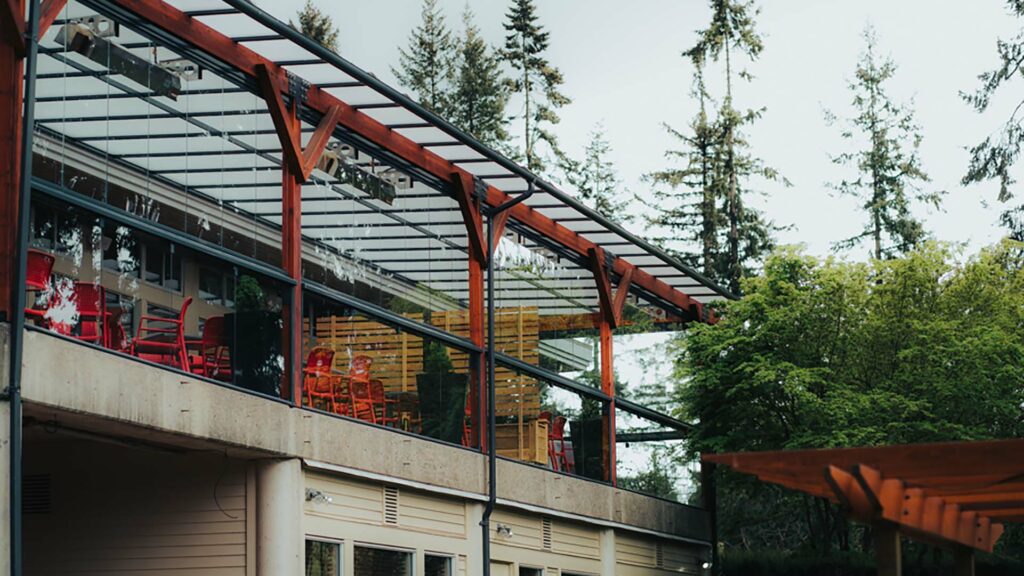
A patio cover is a fixed roof structure with open sides. It keeps the rain off and blocks direct sun, but it provides limited protection from wind and external noise and may offer only modest season extension opportunities. Guests are still exposed to ambient temperatures and everything happening on the street around them.
Retractable glazing is a flexible, versatile system that can be opened or closed as needed. It provides weather protection, wind protection, and acoustic buffering. When the panels are closed, guests are inside a controlled environment. When they’re open, space functions as a conventional patio. You control how the space is used based on weather conditions and operational needs.
One of the key differences is the number of days the patio can remain comfortably usable throughout the year.
Patio Cover vs. Retractable Glazing at a Glance
| Feature | Patio Cover | Retractable Glazing |
|---|---|---|
| Rain Protection | ✓ | ✓ |
| Wind Protection | Limited | ✓ |
| Noise Reduction | Limited | Up to 13 dBA |
| Season Extension | Limited | Extended |
| Open-Air Experience | ✓ | ✓ |
| Weather Flexibility | Fixed | Open or close as needed |
| Guest Comfort | Limited weather protection | Greater protection from wind, weather, and noise |
The right solution depends on your operating model, climate, guest expectations, and long-term business objectives.
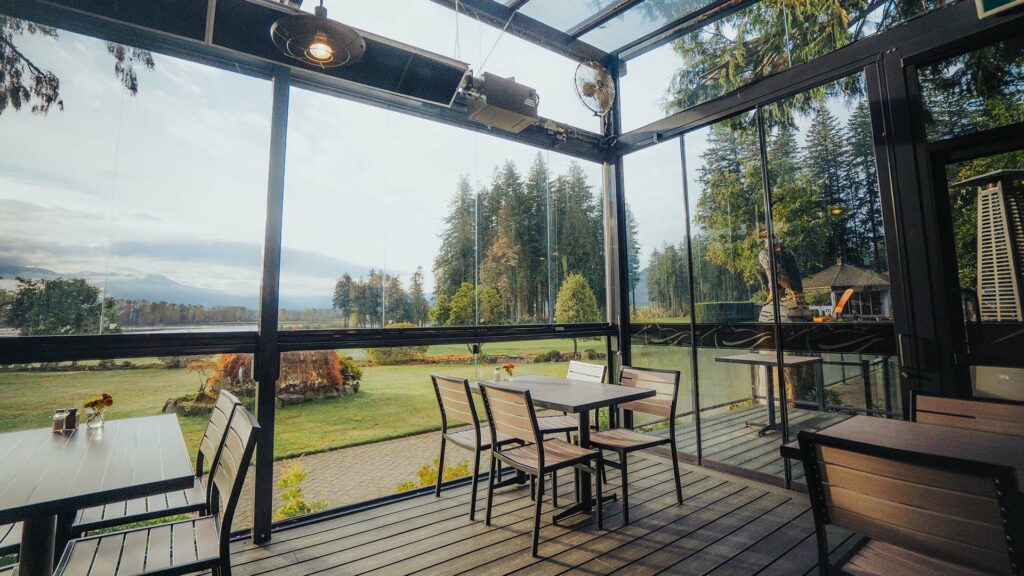
Upfront Cost vs. Long-Term Revenue Potential
It’s true that covers are cheaper upfront, and retractable glazing is a larger capital investment. Commercial operators should go in with clear eyes about that.
But upfront cost is only one part of the calculation, and it’s not the most important one.
A patio cover may help protect guests during light rain and sunny conditions, but it typically provides limited season extension compared to an enclosed glazing system. On top of that, covers accumulate maintenance costs faster than most operators expect. Fabric, hardware, structural wear, and weathering all add up over time. And when the cover reaches the end of life, you replace it. It adds no value to the property or lease asset.
Consider a patio with 40 seats and an average guest spend of $45. If retractable glazing extends the usable season by 10 weeks, even one additional full seating per day could represent substantial incremental revenue over that period. Actual results will depend on occupancy, table turnover, operating hours, local climate, and average guest spend.
The math will vary by operation, but the point remains the same: your investment pays back through revenue that didn’t previously exist, not through cost savings on what you already had.
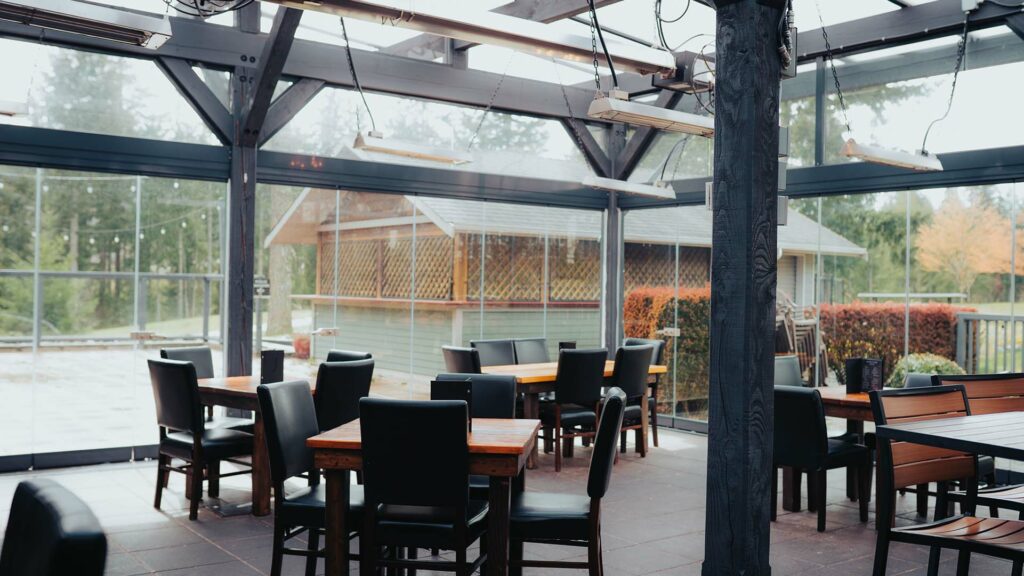
The Revenue Case for Retractable Glazing
Outdoor seating that’s only usable for 2 to 3 months a year is a liability. You’ve committed to the space, and you’re paying it year-round through rent, staffing, insurance, and overhead. When the patio closes, those costs typically remain unchanged. Every day you can’t open up the patio is a day of lost covers on seats you’re already carrying.
It might seem like a patio cover changes this, but in practice, all it does is add marginal protection on mild rainy days. It does not move the shoulder season or let you comfortably seat guests on the patio in January as you would in July.
Here are all the ways an investment in Lumon’s retractable glazing pays for itself.
- Longer Patio Seasons: It converts an outdoor patio into a year-round revenue space. That means shoulder season, winter service, and rainy days that would otherwise send guests inside or home. In markets with short summers, it potentially doubles the number of months the space generates revenue.
- Patio Protection: Expanded weather protection helps extend the lifespan of patio furniture, fixtures, finishes, and other outdoor assets by providing added protection from the elements.
- Noise Reduction: If you’re situated in a busy urban location, the noise argument is just as compelling on its own. Glazing reduces ambient noise by up to 13 dBA; comfortable guests stay longer and spend more. A cover offers no acoustic benefit whatsoever. The noise stays exactly where it was.
- Guest Experience: Temperature control, acoustic comfort, and natural light all affect how long guests stay and how much they spend. A covered patio in November is still cold and loud. Meanwhile, a glazed enclosure in November is comfortable. Increased comfort can encourage guests to make greater use of the space, which may positively impact patio utilization.
- Word of Mouth: A well-designed glazed space photographs well, books well on reservation platforms, and positions the venue differently than a competitor with a basic cover or no outdoor space at all. Glazed patios show up in editorial coverage, in social media posts, and generate the kind of word-of-mouth that fills reservation books.
- Warranty: Lumon systems carry a 30-plus year lifespan. That means the math compounds over time, not just in year one. It also means the glazing becomes a tangible feature of the property or lease asset, which has value at renewal or sale.
However, operators should evaluate long-term revenue opportunities alongside upfront costs when comparing solutions.
When a Patio Cover May Be the Right Choice
- Seasonal operations
- Limited capital budget
- Need for shade and rain protection only
When Retractable Glazing May Be the Better Investment
- Year-round operations
- Revenue-driven patio seating
- Higher utilization goals
- Guest comfort and noise management priorities
What to Avoid in Upgrading Your Patio
Here are some points to consider in your patio upgrade.
The most common mistake is treating the patio as a seasonal bonus rather than a year-round revenue line. If the mental model is “the patio is extra when the weather is nice,” a cover feels adequate. If the mental model is “the patio is part of our seat count and should be generating revenue twelve months a year,” the calculation changes entirely.
The second mistake is choosing the lower upfront cost without modeling the revenue difference over three to five years. The cover looks cheaper on a quote. It looks very different on a profit & loss statement.
The third is underestimating the structural work a cover actually requires. Wind and snow loads in certain markets mean covers aren’t always the simple installation they appear to be. Restaurant owners often discover mid-project that the structural requirements push the cost closer to glazing than the original quote suggested, without any of the revenue upside.
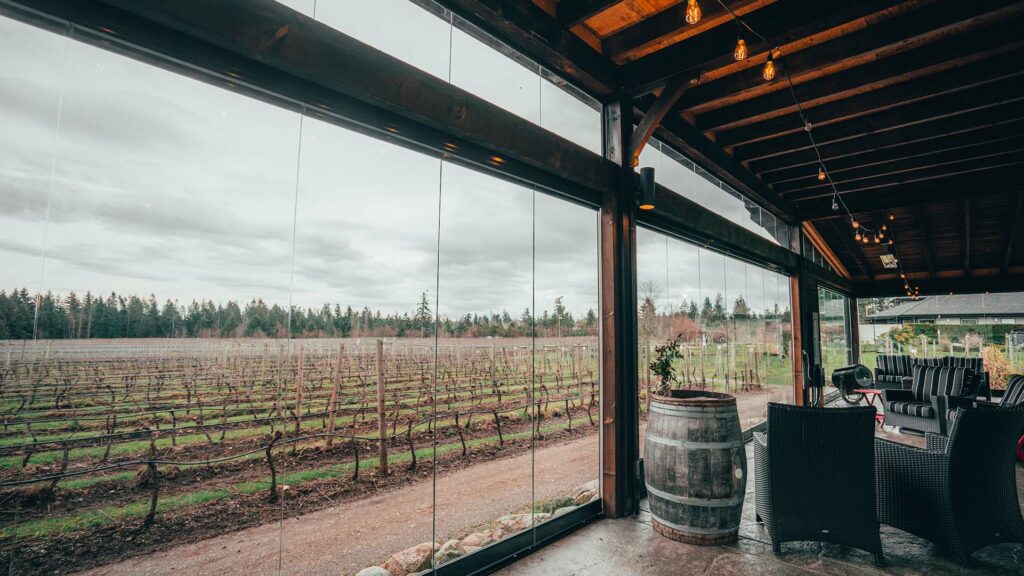
See Lumon’s Retractable Glazing in Action
Lumon works with restaurant and hospitality operators across North America to design and install retractable glazing systems that extend the season and perform year-round.
Browse completed restaurant and hospitality projects in our portfolio, or visit our Restaurants page to see how operators are using Lumon to turn their patios into year-round revenue spaces.
Ready to explore what’s possible for your patio? Get in touch with our team to discuss your project.
-
-

A Developer’s Guide to Retrofitting Aging Condos
Read more…Canada’s aging condo towers are hitting a turning point: the envelope, not the floor plan, now drives renovation decisions. Rather than a burden, façade modernization is a chance to give buildings more flexibility and control over how they perform and hold value.
-
What Architects Should Know About Outdoor Glass Systems
Read more…Outdoor glass systems are landing in briefs faster than most practices have developed a spec position on them. Clients are increasingly seeking year-round outdoor usability, while developers see enclosed outdoor spaces as a way to differentiate projects. These requirements are now being raised during schematic design, and that’s exactly when you can’t afford to wing it.