

Glazed vs. Traditional Balconies
Open and exposed or glazed and protected—not all balconies are the same.
In multifamily design, balconies are more than add-ons—they shape the building envelope, usable space, and long-term performance. With rising climate and energy demands, the choice between open balconies and glazed systems has never mattered more.
The Role of the Balcony Is Evolving
Balconies are expected in mid- and high-density developments. Buyers and renters often see them as non-negotiable. Yet despite their desirability, they’re typically the first to be value-engineered out of performance conversations.
But in today’s regulatory and market environment, outdoor spaces need to do more. It should contribute to energy efficiency, durability, and occupant satisfaction—not just provide a view.
Traditional Balconies: Simpler, But Not Necessarily Smarter
At first glance, traditional open-air balconies seem like the obvious choice: they’re straightforward to design, familiar to contractors, and meet basic occupant expectations. But in the broader context of high-performance building design, they often introduce more challenges than they solve—particularly when it comes to durability, energy efficiency, and occupant comfort.

This design features simple detailing, passive ventilation, and minimal structural load, offering an efficient and adaptable solution.

Traditional balconies offer no protection from wind, rain, snow, or dust, limiting usability to just 4–6 months in most Canadian climates. They also create thermal bridging and envelope discontinuity, which accelerates deterioration of guardrails, cladding, and balcony finishes.

Glazed Balconies: Flexible, Functional, and Resilient
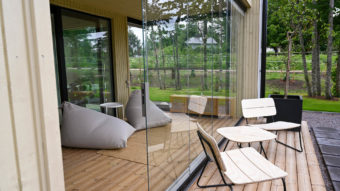
Glazed balcony systems like Lumon are frameless, retractable glazing systems that convert traditional balconies into flexible outdoor rooms. Glazing protects the space without fully enclosing it as an interior area—preserving the outdoor experience while extending its usability.
Glazed balconies have weather protection to keep out snow, rain, and debris while also reducing noise—an especially valuable benefit in dense urban areas. They’re also built with operable panels provide ventilation, and the lightweight construction suits both concrete and wood structures. By shielding balcony materials and finishes, the system extends their lifespan, all while enhancing occupant comfort and increasing the sense of usable square footage.
Glazed balconies require early-stage structural and architectural planning and typically takes slightly longer to install than open railings. These aren’t drawbacks so much as considerations—especially when factored against the performance and ROI gains over the building’s lifecycle.
Key Takeaways for Architects and Developers
Balconies are often overlooked in early design decisions—but that’s precisely where their potential lies. Here’s what to keep in mind when evaluating whether traditional or glazed balconies are the right fit for your next multi-family project.
- Don’t design the balcony last: Treat it as part of the envelope and living space strategy—not just an exterior appendage.
- Plan early: Successful integration of glazed systems depends on early coordination between architects, structural engineers, and façade consultants.
- Think long-term: Traditional balconies may reduce costs upfront, but glazed balconies reduce operating costs and improve value over time.

Ready to Integrate Glazed Balconies into Your Next Project?
We work with architects, developers, and builders across Canada to design, engineer, and install high-performance balcony glazing systems tailored to your project’s needs.
Let’s talk. Contact us to explore how balcony glazing can support your performance goals, enhance your building envelope, and deliver a better experience for residents.
-

Patio Covers vs. Retractable Glazing for Hospitality
Read more…Your patio generates revenue, but only when guests are actually sitting in it. A short patio season can mean only four or five months of active use, while the space continues to incur operating costs throughout the year.
-
-

A Developer’s Guide to Retrofitting Aging Condos
Read more…Canada’s aging condo towers are hitting a turning point: the envelope, not the floor plan, now drives renovation decisions. Rather than a burden, façade modernization is a chance to give buildings more flexibility and control over how they perform and hold value.