Is a Four-Season Sunroom Right for Your Home?
You love the idea of a four-season sunroom, but is it right for you?
Quick answer
A four-season sunroom may be right for you if you want a fully insulated, climate-controlled addition that functions like another indoor room. If your priority is maintaining an outdoor feel, opening the space to fresh air and keeping the project simpler and more cost-effective, a three-season retractable sunroom may be the better fit. Consider budget, permitting, structural requirements, year-round heating and cooling, and how much flexibility you want before deciding.
A sunroom lets you enjoy the outdoors from the comfort of home—but choosing the right type matters. While four-season sunrooms offer year-round use, three-season sunrooms are a more versatile and cost-effective option for many homeowners.
In this post, we’ll explore the key factors you need to weigh before committing to a four-season sunroom.
1) 4 season sunrooms can be costlier than 3 season sunrooms
The cost of a sunroom is one of the first considerations for most homeowners. A four-season sunroom is a significant investment, costing at least three times more than a three-season sunroom. This higher cost is due to the extensive insulation, heating, and cooling systems required to make the space comfortable throughout the year.
In contrast, a three-season sunroom is more affordable while still offering nearly year-round usability. If budget is a major factor, a three-season sunroom might be the better option, providing you with a beautiful space to enjoy at a fraction of the cost.
2) Four season sunroom adds square footage to your Gross Floor Area
Another important factor is how a sunroom impacts the Gross Floor Area (GFA) of your home. A four-season sunroom is essentially an extension of your house, fully insulated and integrated into your home’s existing HVAC system. This means it adds square footage to your property, increasing its overall value. However, this addition also comes with considerations such as increased property taxes (which we’ll discuss next).
On the other hand, while a three-season sunroom can extend the usability of your backyard up to 12 months with using a simple space heater, it does not add to your home’s GFA. The small gaps between the glass panes mean it isn’t a completely insulated space, but it does offer flexibility in enjoying outdoor-like conditions without the extra financial burden of adding GFA to your home.
3) Four season sunroom additions add on to property tax
Because a four-season sunroom adds to the GFA of your house, it also increases your property taxes. This is an important consideration, as the additional taxes can add up over time, making the four-season option more costly in the long run.
Conversely, a three-season sunroom does not affect your property taxes. Since it doesn’t contribute to the GFA, it allows you to enjoy an enhanced living space without the ongoing financial implications associated with property tax increases.
4) Getting a permit for four season sunrooms takes longer
Adding a four-season sunroom to your home is more complex than adding a three-season one, especially when it comes to obtaining the necessary permits. The permit process for a four-season sunroom is longer and more expensive due to the structural changes and additional square footage it adds to your home. On average, it can take up to a year to secure the necessary permits for a four-season sunroom, and that’s if it’s even possible in your area.
In contrast, obtaining a permit for a three-season sunroom is typically a much faster and more straightforward process, often taking anywhere between 1-3 months on average. This quicker timeline allows you to enjoy your new space much sooner.
5) Four-season sunrooms offer no flexibility
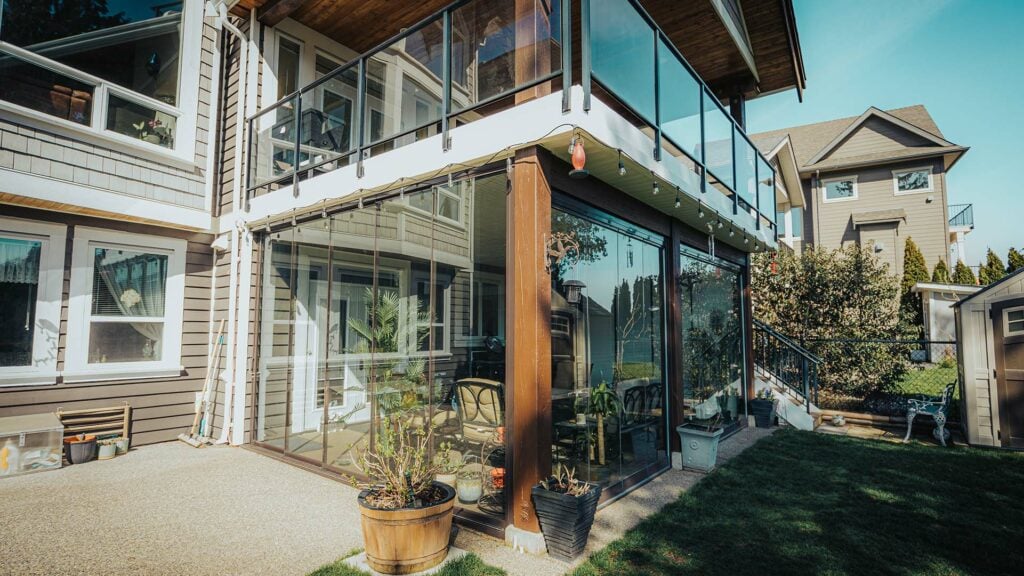
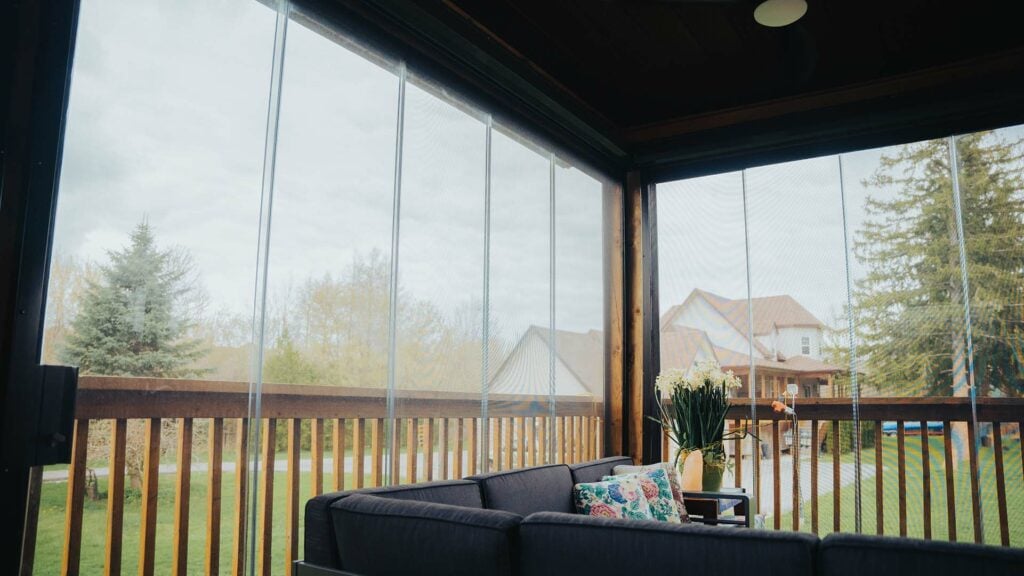
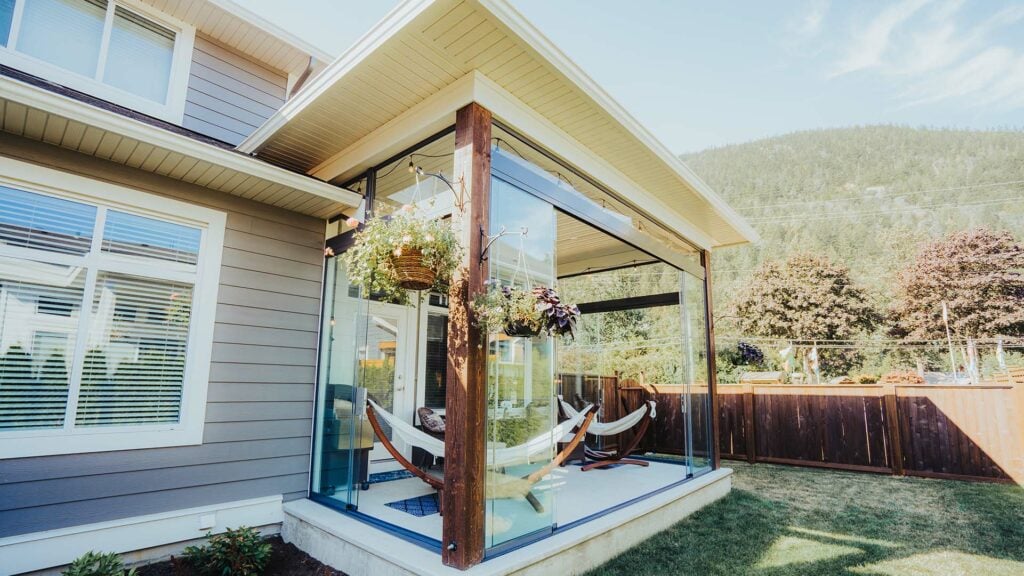
One of the standout features of a three-season Lumon sunroom is its flexibility. With retractable glass panels, you can easily open the space to let in fresh air during the warmer months and close the panels off when the weather cools down. This level of control allows you to adapt the space to your comfort.
A four-season sunroom, however, is a fixed space with permanently sealed glass panels, functioning more like an additional room in your home. While it offers year-round use, it lacks the adaptability of a Lumon three-season sunroom, which can seamlessly transition between an enclosed and open space.
Conclusion
While a four-season sunroom may seem appealing for its year-round usability and added home value, it comes with significant costs, both upfront and ongoing, as well as a lengthy permit process.
A three-season sunroom, on the other hand, provides a cost-effective, flexible solution that allows you to enjoy the outdoors for most of the year without the complexities associated with adding GFA to your home. If you’re looking for a balance between comfort, affordability, and versatility, a three-season sunroom is the better choice.