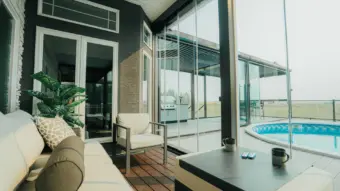
Creating the Perfect Patio Office Workspace
The perfect home office workspace might be just outside your back door.
Years after the world shifted to remote work in 2020, millions of Canadians are still working from home, and the question has shifted from Can I work from home? to How do I work productively from home?
Outdoor spaces saw major growth in use during the pandemic. There’s a clear reason why. Home offices ran into one big problem: not enough space. Condos and townhouses feel cramped when rooms have to do double duty. A room that’s an office by day and a rec room by night never really feels like either one.
Remote workers searched their homes for a real, working setup. One answer was there the whole time: the balcony or the patio. The line between home and office had blurred, and people needed a space that felt like neither. Outdoor space became that answer. A room with no ceiling, no coworkers, and no distractions.
But it doesn’t go without its necessary adjustments and changes to optimize the space to its fullest potential. If you’ve been considering converting your outdoor space into a full-time workspace, here’s what to consider, what to avoid, and how retractable glazing can bring your outdoor workspace to the next level.
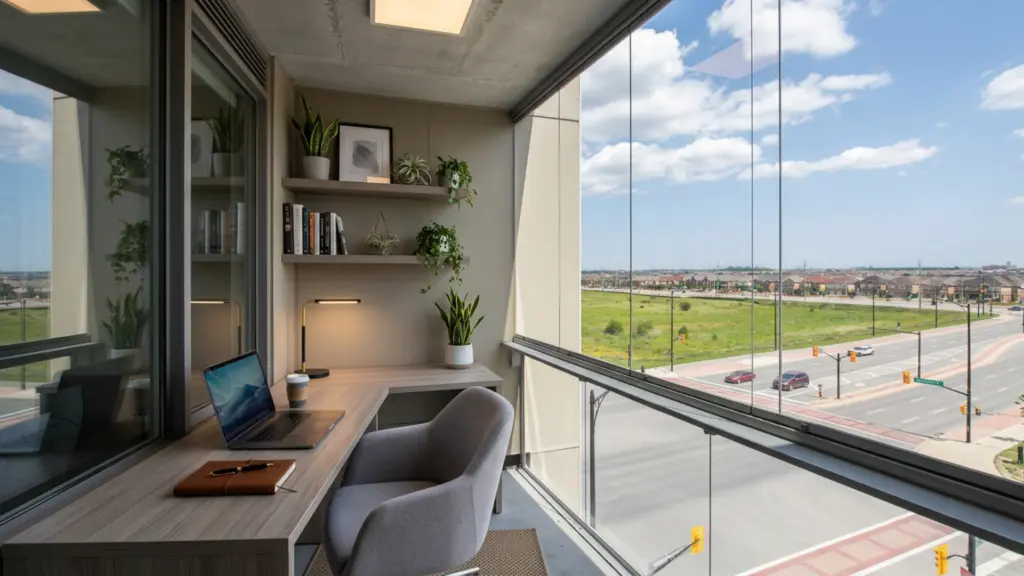
Why a Patio Office Actually Works
The appeal isn’t just aesthetic. Working outdoors has measurable benefits that a spare bedroom simply may not replicate.
- Natural light changes how you work. Exposure to daylight directly affects mood, focus, and energy levels. Compared to the flat, artificial lighting most indoor offices rely on, working in natural light also reduces eye strain over the course of a long day.
- Separation matters, even if it’s just a few steps. One of the persistent challenges of remote work is that home and work occupy the same physical space.
- Commuting, no matter how tedious, is a way to mentally clock in and out of work. Stepping outside to a dedicated workspace creates a version of that transition. That small physical distance helps you mentally sign off.
- It changes everything for remote workers without a dedicated office indoors. Not every home has a spare bedroom to convert. An outdoor workspace turns an underused balcony or patio into additional functional square footage without having to renovate.
- There are health benefits, too. Fresh air circulation keeps energy levels higher than a stuffy home office can. Plus, the natural breaks that come with being outdoors are genuinely good for your nervous system in a way that scrolling your phone between calls is not.
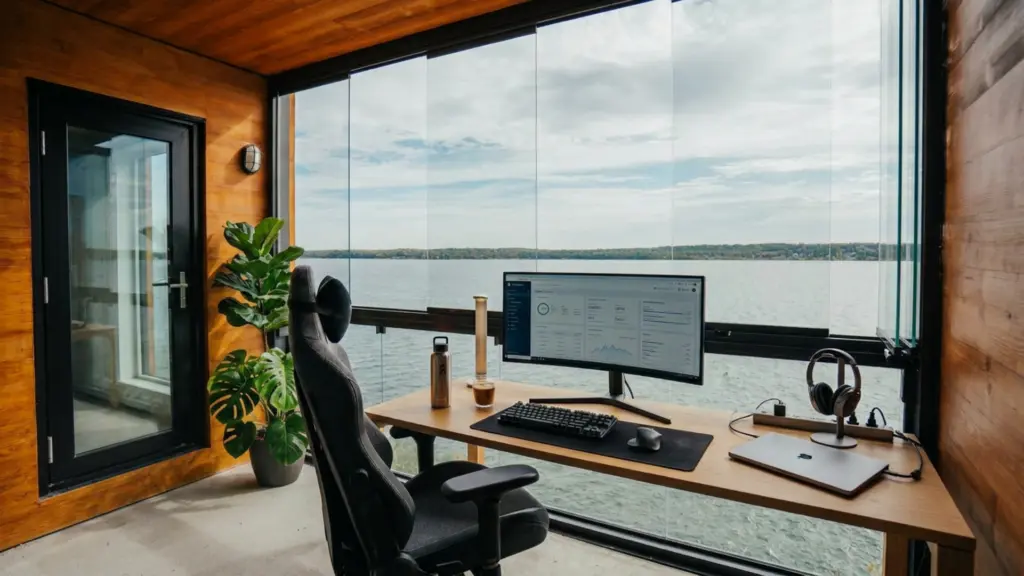
What a Good Outdoor Workspace Needs
Getting the most out of an outdoor office comes down to solving a few practical problems.
- Ergonomic furniture that works as hard as you do. Choose weather-resistant seating with proper lumbar support, and a table at the right desk height.
- Uninterrupted access to power and Wi-Fi. Assess your Wi-Fi signal strength before you commit to the space; a range extender or mesh node may be worth it. Outdoor-rated power outlets or weatherproof extension cords are a worthwhile investment, as well.
- Shade and temperature control. Direct sun makes screens unreadable, and being backlit against sunny window doesn’t work for video calls. A pergola, retractable awning, or shade sail solves the glare problem and keeps temperatures comfortable. In summer, you also want the option to let air move through the space, which is where a well-designed Lumon glazing system works well.
- Light sources for working early or late. Energy-efficient outdoor lighting like warm LEDs can reduce screen glare, extending the hours you can use your outdoor workspace into the early mornings and evenings.
- Noise reduction and privacy. Constant noise makes working from home more distracting than helpful. Combining strategic placement of your workspace and physical barriers, such as planters, privacy panels, or retractable glazing, can make a meaningful difference in both acoustics and focus.
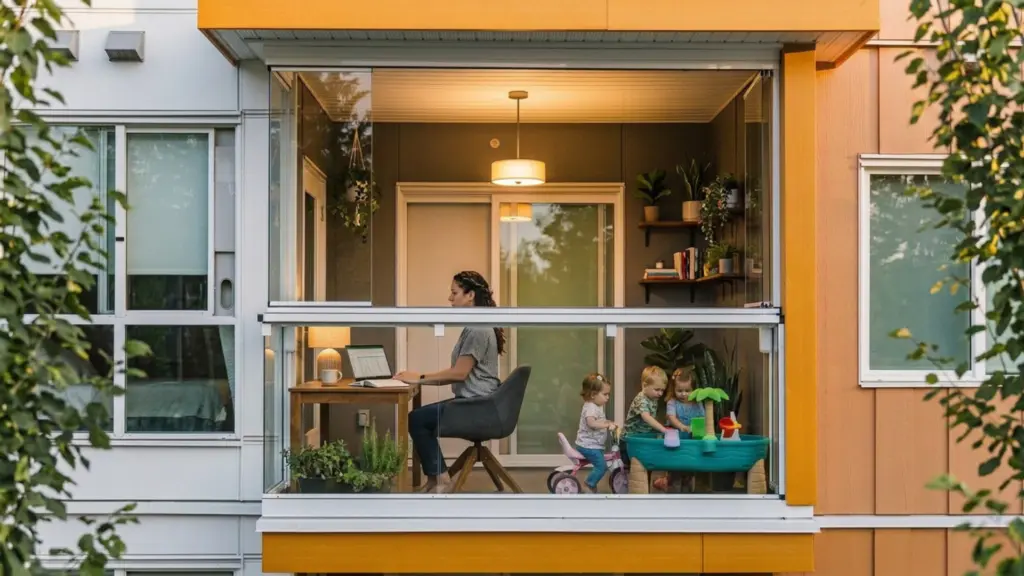
Making It Work Year-Round
The most common objection to an outdoor office is seasonal: What happens in October? It’s a fair question, especially in Canada. But you don’t have to pack it in at Thanksgiving. Instead, there are design options that allow you to use the space for more of the year than you’d expect.
Before the temperature drives people back inside, the wind does. Weather protection is an important consideration, especially when it comes to protecting your electronics. A physical barrier at the perimeter of a balcony or patio dramatically extends comfort into the shoulder months.
The goal is to create a space that feels like outdoors in spirit and indoors in function; with retractable glazing systems, such as those offered by Lumon, that balance is achievable. It allows outdoor space to hold heat better than an open one, and proper ventilation keeps it from becoming stuffy in summer.
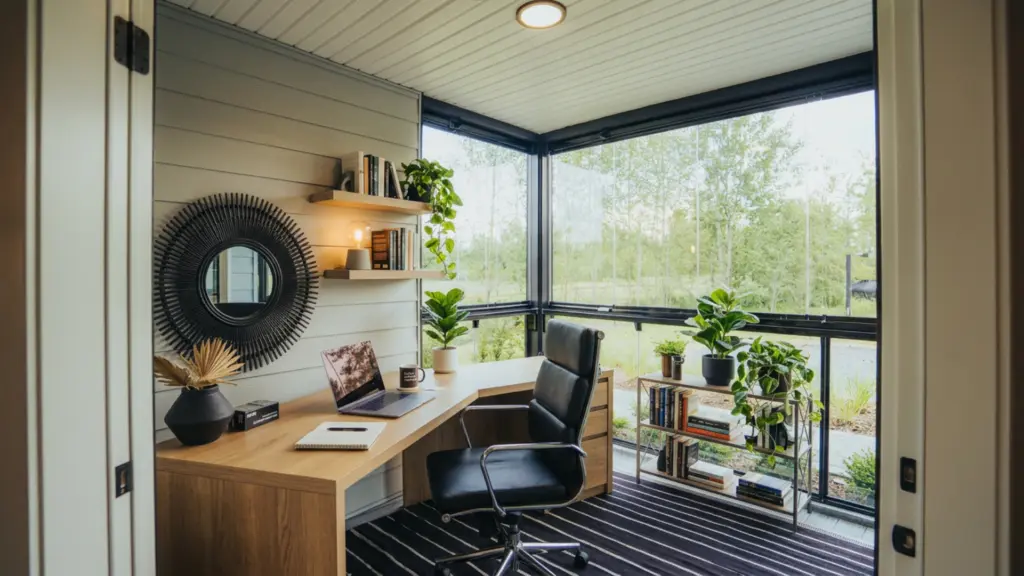
How Retractable Glazing Changes the Equation
Retractable glazing changes what’s possible in a meaningful way.
A glazed outdoor space that stays genuinely connected to the outdoors while protecting against the elements that end the season early. In summer, you retract the panels to let full airflow through. In cooler weather, you close them to create a temperature buffer that keeps the space comfortable well into fall. And, with the right setup, through the winter, too.
For remote workers, the noise reduction benefit is particularly underrated. Glazing creates a significant acoustic buffer from street noise and ambient sound, which translates directly to better focus, and more professional video calls.
The design is clean, frameless, and modern. It doesn’t block views or change the character of your outdoor space. Instead, it expands what your space can do. And as a property improvement, it adds measurable value. Outdoor living space that functions year-round is a genuine differentiator in the Canadian real estate market.
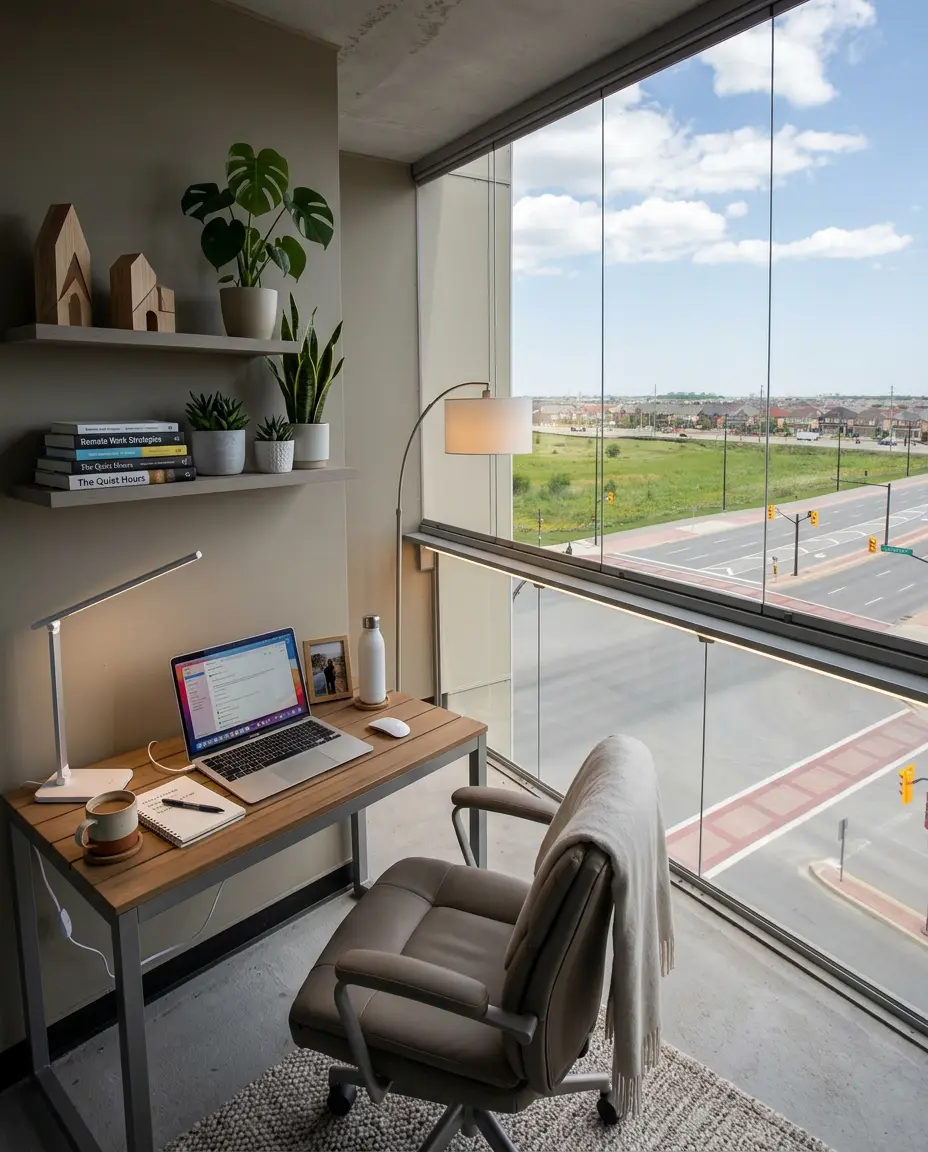
Ready to See What’s Possible?
If you’ve been working at the kitchen table for years and your patio has been largely for show, it might be time to change that.
Book a home consultation with Lumon to see what retractable glazing could look like in your specific space. We’ll assess your balcony or patio, walk through the options, and show you exactly what a year-round outdoor office could look like.
Want a glimpse of what retractable glazing could look like in your outdoor space? Try out Lumonizer, our AI-powered visualization tool!
FAQs about Patio Office Spaces
Most homeowners get comfortable use out of it well into fall and through mild winter days. Glazing creates a thermal buffer that blocks wind and retains heat, making the space several degrees warmer than an open balcony.
With that said, it’s best understood as a 3-season solution rather than a heated enclosure. For shoulder-season remote work, it’s a genuine game-changer.
Lumon systems hold CCMC certification (No. 13640-R) and are custom-engineered to each specific installation, which often helps with the approval process. Lumon is familiar with the strata landscape in Canada and can help you understand what documentation your building is likely to need.
Your Lumon design consultant will give you a clear timeline specific to your space during the home assessment.
There are no fabric components to replace, no screens to repair, and no moving parts that require regular servicing. Occasional cleaning is all most homeowners need to keep the system looking and functioning like new.