How to Design an Outdoor Space That Feels Like You
Your outdoor space should feel like yours—not a showroom or catalogue.
Quick answer
Start by designing your outdoor space around how you actually live, not around a trend or showroom photo. Decide how you want to use the space, choose a consistent design style, plan for the realities of Canadian weather and then add furniture, lighting, plants, and personal details. Weather protection such as retractable glazing can provide a flexible foundation that lets the rest of your design work across more of the year.
There’s a particular frustration in owning an outdoor space you barely use. The furniture is there, the potential is there—but the wind picks up, the clouds roll in, and everyone retreats inside. Another season gone, the garden still just a corridor you pass through.
But it doesn’t have to be this way. The outdoor spaces we love to linger in share something in common: they feel intentional. They feel like someone made decisions, expressed a point of view, and solved for real life.
What Makes a Backyard Truly Reflect Your Personality
This guide is about how to do exactly that: starting with how you live, moving through style and personality, and ending with the practical layer that holds it all together.
Start with how you actually live
Before you spend a single dollar on furniture or plants or lighting, ask yourself an honest question: what do I actually want this space to do?
- Are you someone who hosts Sunday lunches for twelve people?
- Or do you want a quiet nook for morning coffee and a book?
- Do you cook outside?
- Do children or dogs need to move freely through your space?
- Is privacy a priority, or do you enjoy a sense of openness?
The answers to these questions can are more valuable than any mood board. A space designed around how you genuinely live will always outperform one designed around how you imagine you might live.
It will be used. It will feel right. And it will last, because it was built on real habits rather than aspirational ones.
Commit to an aesthetic
Outdoor spaces are just as capable of having a strong design identity as any interior room — and yet many people treat them as an afterthought, filling them with mismatched pieces accumulated over time. The result is a space that looks like a waiting room rather than a destination.
Fortunately, almost every interior aesthetic translates beautifully outside. Coastal living leans into natural textures: rattan, linen, bleached timber, pebble-grey tones, trailing coastal plants. Nordic and Scandinavian minimalism brings clean lines, muted palettes, and a focus on quality over quantity; a single beautiful teak bench can be enough.
Lush bohemian style layers rugs, hanging plants, lanterns, and mismatched ceramics in warm, earthy tones. A sleek urban terrace might work in steel, concrete, dark stone, and architectural planting. A rustic farmhouse approach favours reclaimed wood, ironwork, and an abundance of flowering plants.
- Coastal: Rattan, linen, bleached timber, pebble tones, trailing greenery
- Scandi Minimal: Clean lines, muted palette, quality teak or powder-coated steel
- Lush Bohemian: Layered textiles, hanging plants, lanterns, warm earthy ceramics
- Sleek Urban: Steel, dark stone, concrete, architectural sculptural planting
The style you choose is less important than choosing one and committing. An outdoor room with a clear aesthetic point of view always reads as more considered—and more welcoming—than a space that tries to be everything at once.
Solve for the weather
Here is the uncomfortable truth that sits at the heart of most underused outdoor spaces: the weather doesn’t care about your design choices. A beautifully curated terrace becomes instantly unusable the moment a cold wind arrives or the rain sets in. This is why so many people invest in outdoor furniture that spends most of the year under a cover: the space was designed for a version of the climate that only shows up occasionally.
The real shift happens when you stop designing for perfect days and start designing for all days. That means thinking about enclosure, weather protection, and year-round comfort as foundational decisions, not afterthoughts you bolt on later.
Why Lumon retractable glazing changes everything
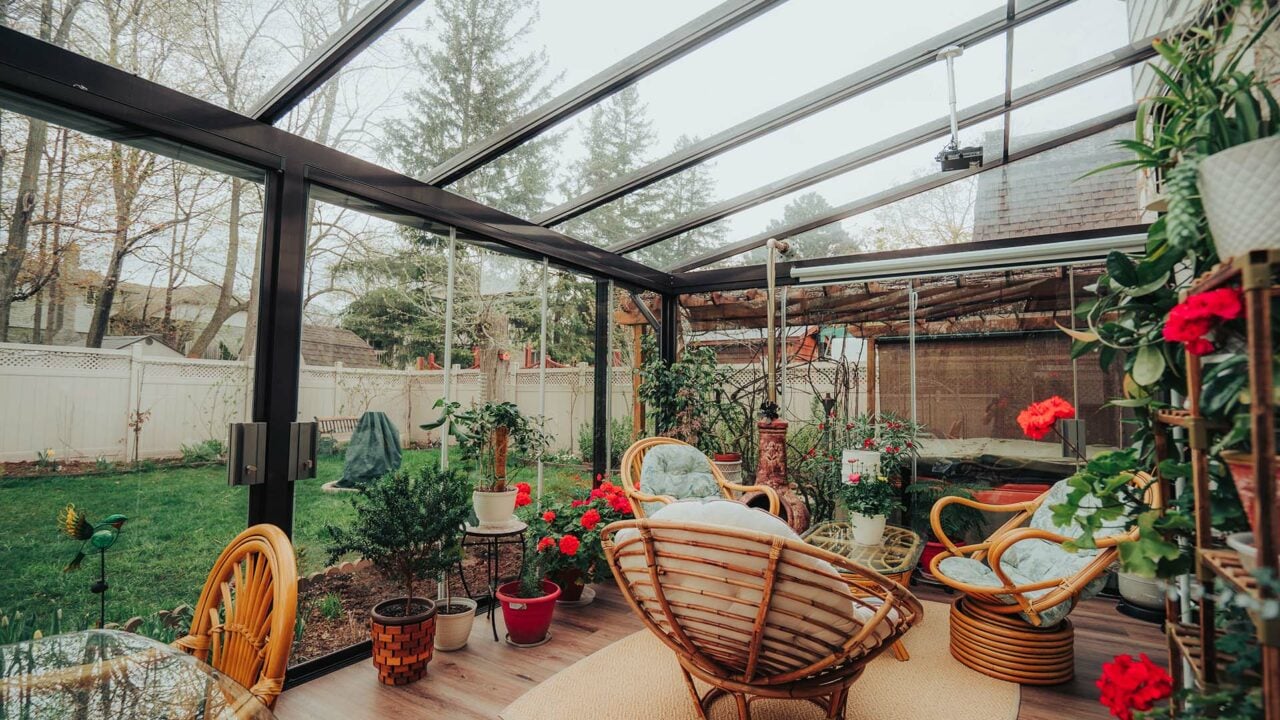
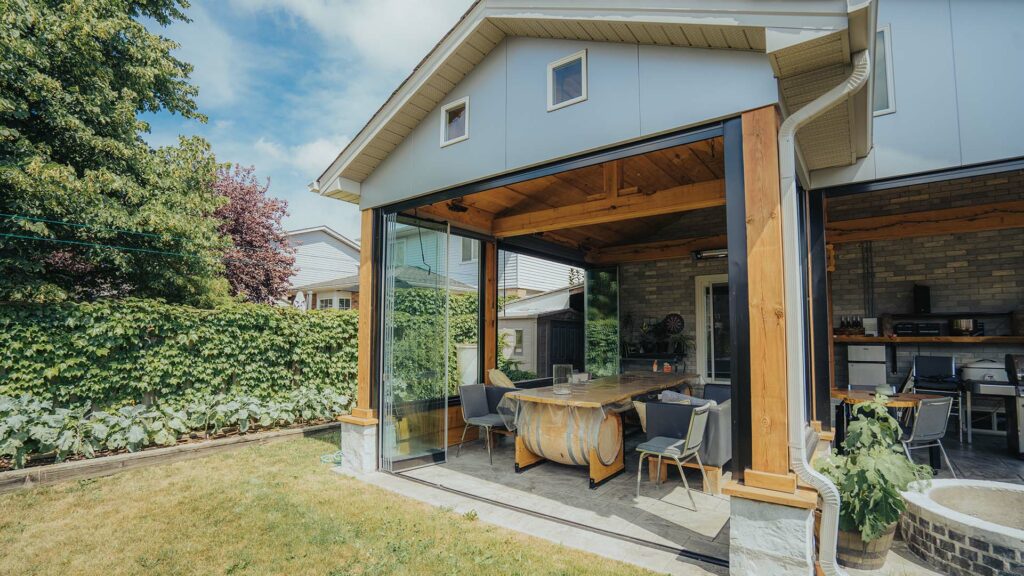
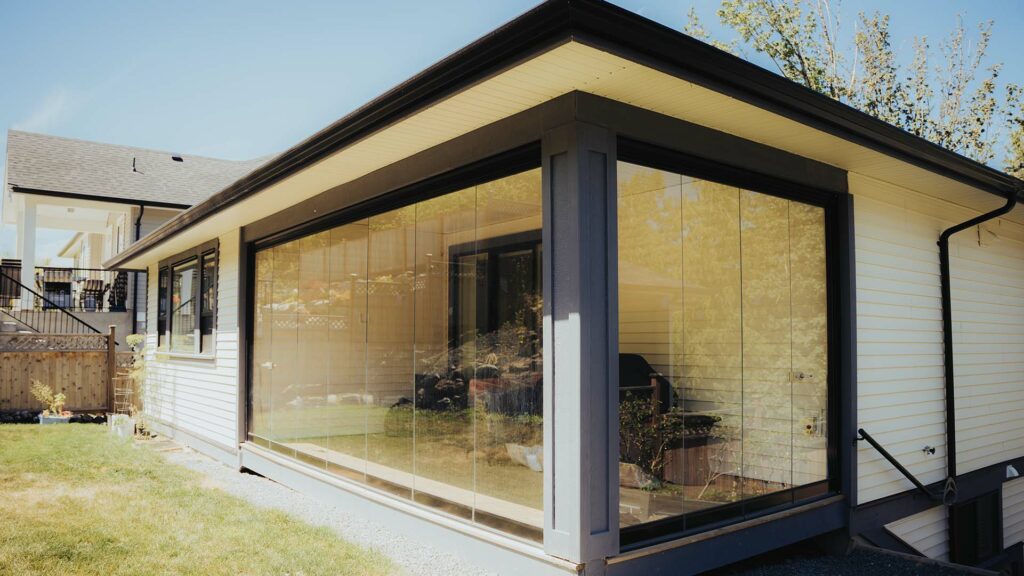
Lumon’s frameless, retractable glass panel systems are designed to do something most enclosure solutions cannot: disappear entirely when you don’t need them. On warm, still days, the panels fold away completely and the space is fully open to the garden. When the wind picks up or the temperature drops, the glass closes and you’re in a sheltered, light-filled room — without the sense of being sealed indoors.
The practical benefits are significant. Wind, rain, and cold are kept at bay across three seasons. A good outdoor heater (infrared works especially well in glazed spaces) extends the usability further into winter. The glass itself creates natural heat retention, making the space warmer and more comfortable for longer each day.
But the real design advantage of Lumon is what it doesn’t do. Unlike solid structures, permanent glazing, or fixed pergolas with opaque roofing, a Lumon system never competes with your aesthetic. The glass is clear, the frames are slender, and when the panels are open, they’re simply not there. Your furniture, your plants, your lighting, your style… that’s all anyone sees. Lumon is the invisible backbone that makes the whole thing possible.
Whether your space leans coastal, bohemian, urban minimalist, or somewhere entirely its own, the glazing sits behind the aesthetic rather than defining it. It’s one of very few structural investments that genuinely works with any design direction.
Layer in the personality
Once you have a weather-proof, year-round structure in place, the process of making the space truly yours can begin in earnest.
- Start with the floor: Decking, large-format tile, natural stone, and composite materials all set a tone before a single piece of furniture arrives. Then build upward: seating that fits your chosen aesthetic, cushions in outdoor-rated fabrics that hold colour through the seasons, a rug to anchor the arrangement and define the room within the room.
- Warm lighting: This is often the element that transforms a space from daytime functioning to genuinely atmospheric. String lights give warmth and a sense of festivity; wall-mounted sconces create a more architectural feel; a single pendant over the dining table signals that this is a proper room, not an afterthought. Put lighting on dimmers wherever possible: the ability to shift from bright and practical to low and ambient is the single most useful setting in any outdoor space.
- Add greenery with plants: They do double duty in an outdoor room. Plants contribute to the aesthetic — sculptural agave and clipped box for a minimalist scheme, trailing ferns and oversized tropical leaves for something lush, potted citrus and lavender for a Mediterranean mood — and they bring the space to life in a way that no furniture can. Don’t underestimate them as a design tool.
- Finally, the personal touches: Outdoor-rated artwork exists and is worth seeking out. Good ceramics, storm lanterns, a well-chosen throw draped over a chair are all the details that make the difference between a space that looks designed and one that looks lived in.

The space you’ll actually use
A great outdoor space isn’t a luxury reserved for people with large budgets or perfect climates. It’s the result of a few good decisions made in the right order: know how you live, choose a style and commit to it, solve for the weather at a structural level, and then layer in the details that express your personality.
The weather solution is the one most people get to last—or skip entirely—hoping for the best. Getting there first, with something like Lumon’s retractable glazing, changes the entire equation. Suddenly the space isn’t subject to the forecast. It’s just a room: an exceptionally beautiful one, with a view of the garden, that you can use every single day of the year.
Start small if you need to; start with how you actually live. The rest follows naturally, and sooner than you’d expect, you’ll find yourself out there in October bundled up with a book, wondering why it took you so long.
Curious about what a sunroom could do for your space? We’d love to hear about it. Get in touch with a Lumon Design Consultant today to learn more!