
How Much Noise Does Balcony Glazing Block Out?
Balcony glazing blocks out significantly more noise than most people expect.
Good noise reduction is invisible—until it’s not. Whether it’s traffic outside, chatting neighbours, or the constant hum of city life, unwanted noise always finds a way to creep in just when you’re trying to relax, work, or truly enjoy your home.
Sometimes, the sounds of the world around us are inevitably heard, and represent a bustling, vibrant community you play an active part of. But research has shown that persistent noise pollution has negative impacts on physical and mental health.
This brings into question ways that we can design our residential spaces to block out unwanted elements like environmental hazards and noise—particularly as we build higher density spaces. As urban living continues to thrive, and homes are designed to use space more efficiently, impactful ways to reduce or block out noise altogether become essential.
This is where Lumon Glazing and retractable glass balcony systems come into play. Lumon Glazing enhances outdoor spaces with weather protection, sound-insulation barriers that contribute to a more serene environment; exactly what you want in a space that’s just yours.
So how much noise do Lumon’s glazing products actually block, and how effective are they at reducing noise pollution overall? Let’s dig deeper.
How Does Lumon Glazing Work?
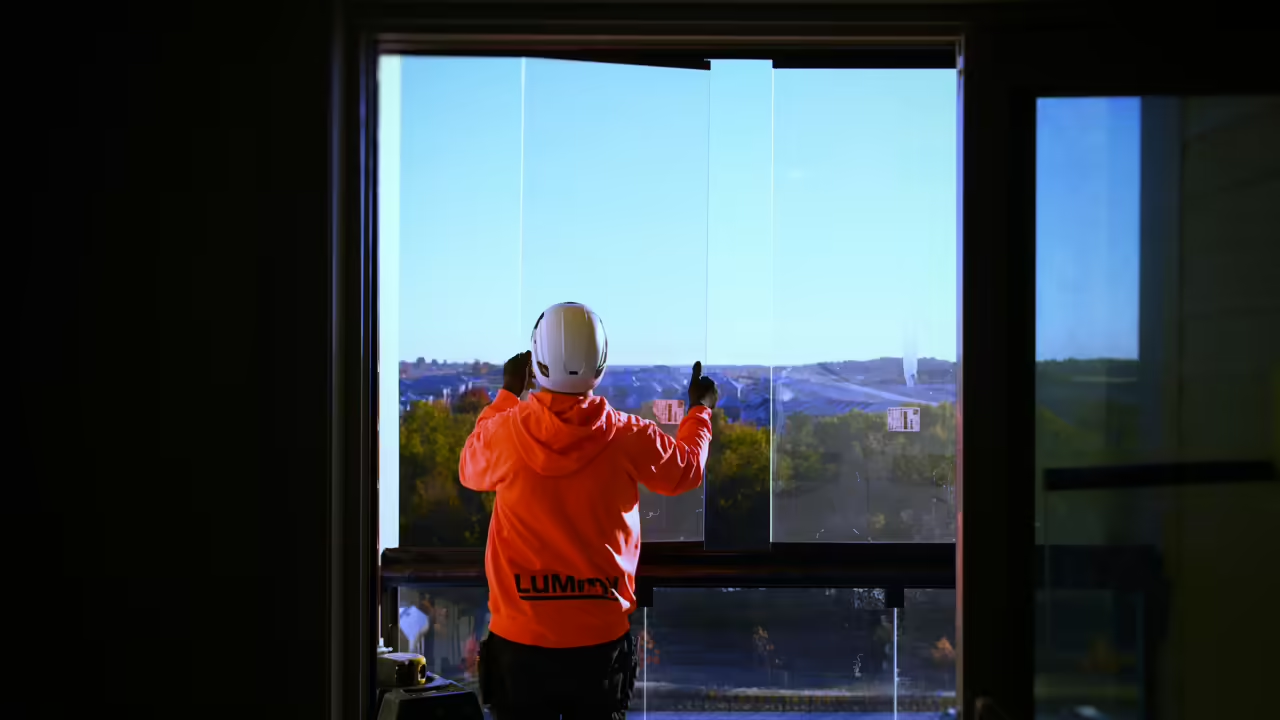
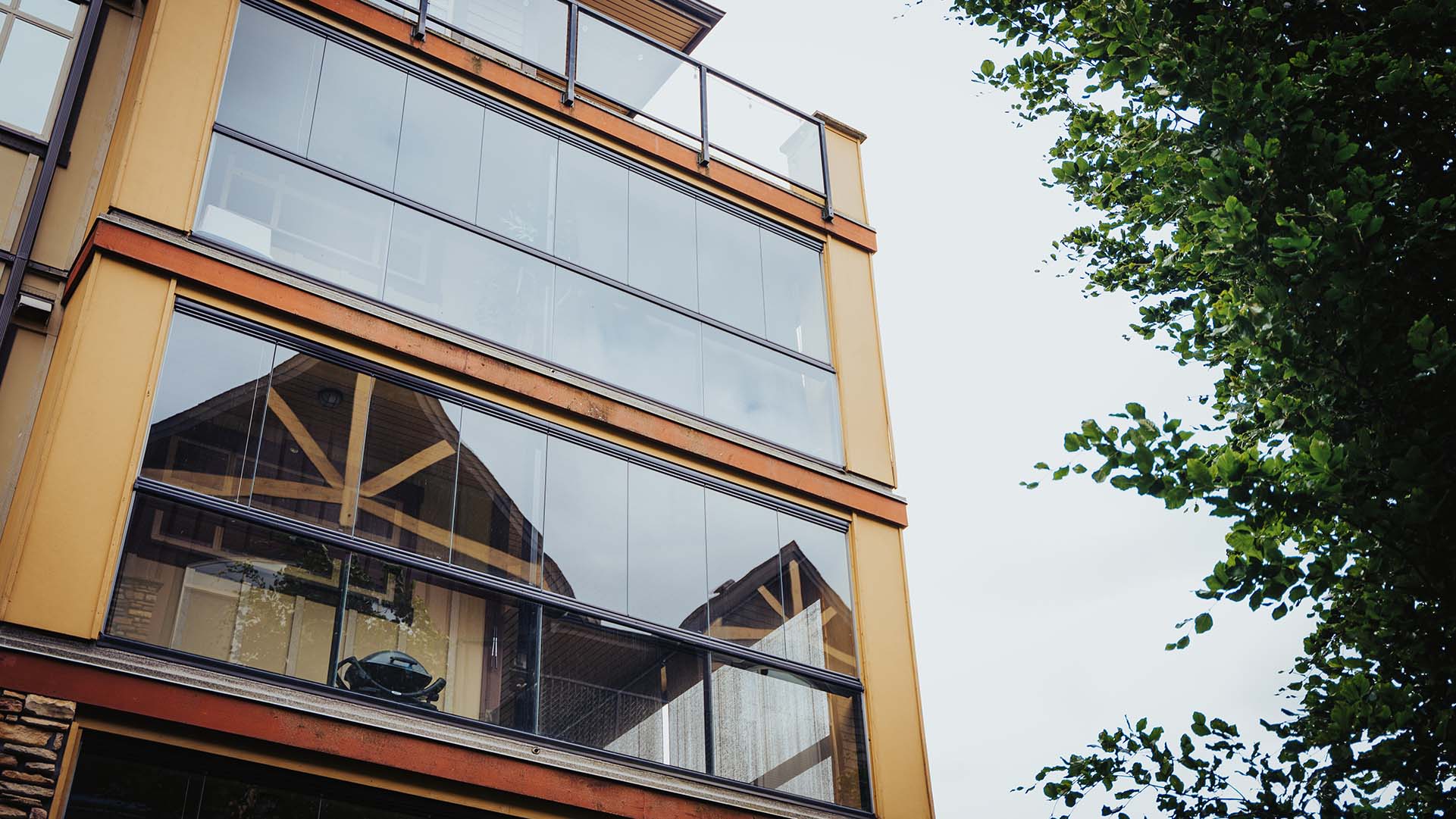
Lumon’s glazing system is a retractable glass partition system designed to enclose outdoor spaces like balconies, terraces, and patios, extending them into year-round living spaces. It’s made from sleek glass panels that slide open or closed, offering protection from rain, wind, and snow. Lumon’s products have come to be known for their aesthetic properties, but the inherent noise reduction that comes with those properties has become one of its most compelling features.
Design
The key to the Lumon system’s noise-blocking comes from the high-quality materials used and the design of the glass panels. We use laminated or tempered glass to reduce the transmission of noise.
The panels are designed to fit nicely together when closed, so there are fewer spaces gaps through which sound can get through and into the space. The gaps are there by design: they provide just enough airflow to keep moisture from building up, while still insulating the space.
Materials
The primary mechanism that blocks noise is through the physical properties of the high-quality glass itself. Glass is a great material for blocking sound ways, especially when it is laminated. This is particularly important in noisy urban environments where the sounds of cars, trains, concerts, and construction can easily enter a home through open balconies.
How Much Noise Is Blocked Out?
Studies and customer feedback suggest that Lumon’s glazing systems can offer perceived noise reduction of up to 50% or more. To get a better sense of what that means in practice, let’s look at some sources of sound levels.
A sound at 70 decibels (dB) is roughly equivalent to city traffic or a vacuum cleaner. Feedback from customers and surveys suggests that Lumon system can reduce the noise to between 19 to 28 dB or so, which is closer to a quiet conversation or the sound of a whisper.
It’s important to note that Lumon’s installations will not eliminate noise entirely, particularly if you are exposed to extremely loud or low-frequency sounds. But, if you’re designing a residential building near a train line or high-volume traffic artery, it will certainly help counter those levels of noise.
What Affects Noise Reduction?
Of course, not every Lumon installation will offer the same level of noise reduction; this all depends on the specific setup and configuration. Some of these factors include:
- Type of glass used
- Level of sealing
- Type of noise being blocked out
Type of Glass
Lumon uses either tempered or laminated glass, depending on the design. Laminated glass, which has a layer of plastic sandwiched between two panes of glass, is particularly effective at blocking noise. The plastic layer absorbs sound vibrations, preventing them from passing through the glass. Tempered glass is also useful, though it may not offer the same level of soundproofing as laminated glass.
Sealing
Gaps or imperfections in the seals between the panels can reduce its effectiveness. We take great care to add a strong seal to our installations, insulating sound right from the start.
Type of Noise
Our products are particularly effective at blocking mid-range and higher-frequency sounds, such as traffic noise, voices, or street sounds. But low-frequency sounds, like heavy machinery or deep bass sounds, are more difficult to block out with any soundproofing system. While Lumon glazing will help reduce these noises to an extent, it may not block them completely.
Other Reasons to Choose Lumon Glazing
It’s not just about noise reduction. Lumon glazing offers several other benefits that homeowners notice right away.
- Temperature Control: Lumon glazing helps to regulate the temperature by insulating the space, keeping it space warmer in winter and allowing the windows to open for more airflow in the summer.
- Protection from the Elements: Lumon glazing also protects rain, snow, and wind—particularly important for those who are buying in areas with cooler temperatures and more precipitation.
- More Privacy: Multi-residential spaces like condos can be too close for comfort for many homeowners. Lumon glazing gives buyers more privacy by blocking the view from outside. This is especially useful in high-rise buildings or areas with lots of pedestrian traffic.
- Higher Property Value: As an attractive, functional addition to the unit Lumon glazing can add to the overall amount of space—and the value—of the property.
See if Lumon Could Be a Great Fit For Your Project
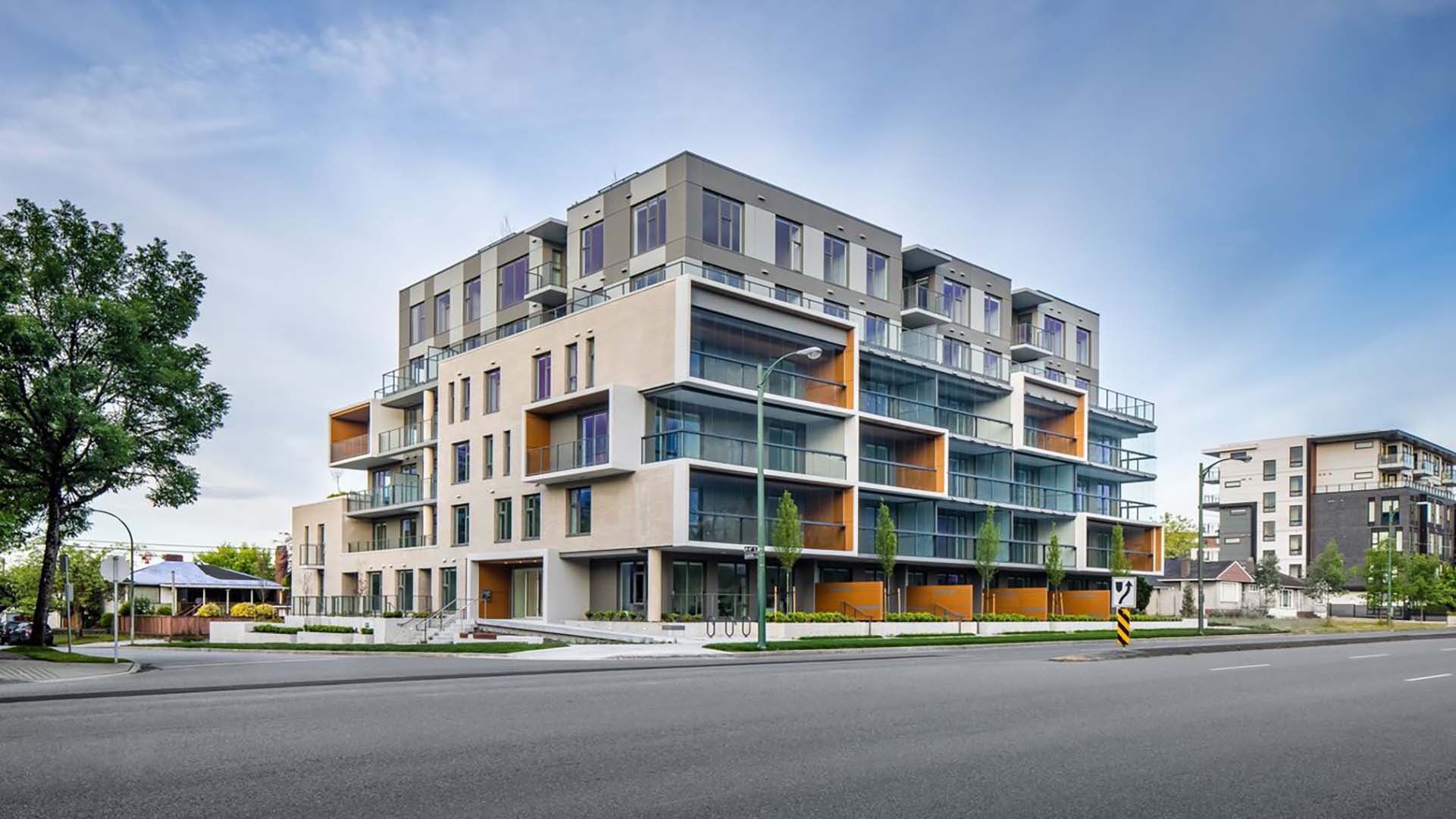
Whether your next project is bringing higher density to the suburbs or developing an existing space in an urban centre, everyone could benefit from a little less noise pollution in their lives. Lumon glazing is an innovative solution that reduces noise pollution and makes for a more comfortable living space—fitting hand-in-hand with the residential designs of the future.
Want to see what Lumon could look like in your next development? Get in touch, and we can answer any questions you may have.
Learn More From Our Blog
-

Patio Covers vs. Retractable Glazing for Hospitality
Read more…Your patio generates revenue, but only when guests are actually sitting in it. A short patio season can mean only four or five months of active use, while the space continues to incur operating costs throughout the year.
-
-

A Developer’s Guide to Retrofitting Aging Condos
Read more…Canada’s aging condo towers are hitting a turning point: the envelope, not the floor plan, now drives renovation decisions. Rather than a burden, façade modernization is a chance to give buildings more flexibility and control over how they perform and hold value.