
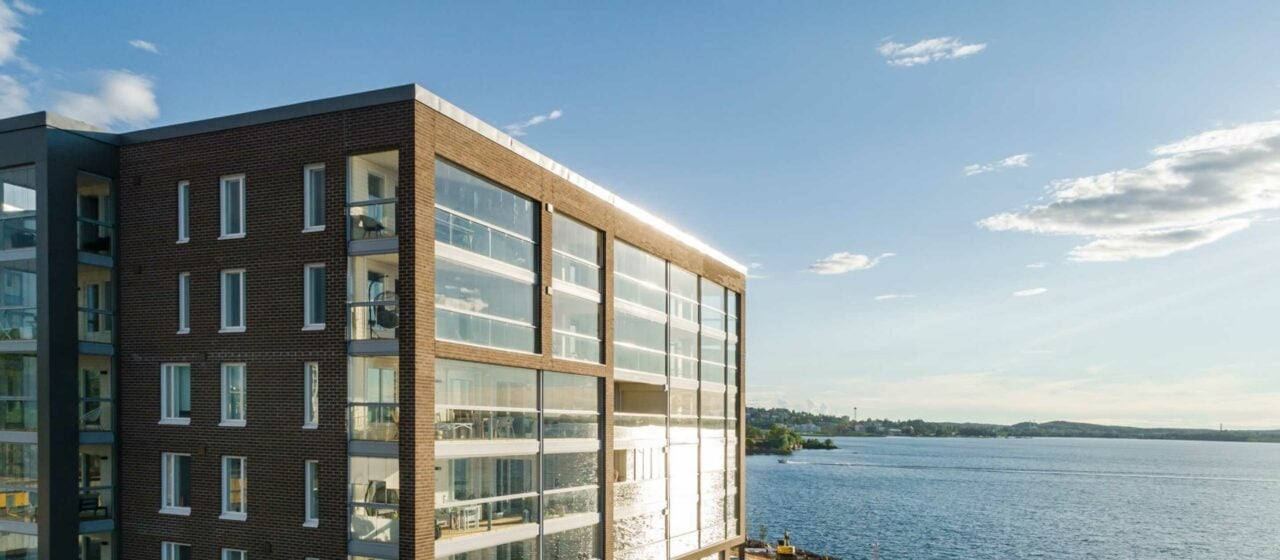
The Lumon Glazing product is an eco-friendly option
1 July 2021
The following question often pops up: can a product made of glass and aluminium be eco-friendly? The answer is self-evident: yes, it is possible. The net impact of the Lumon Glazing product on the climate is negative. In other words, its use prevents more greenhouse gas emissions than what is released into the air during its serviceable life. Please, read on to find out what this means in practice.
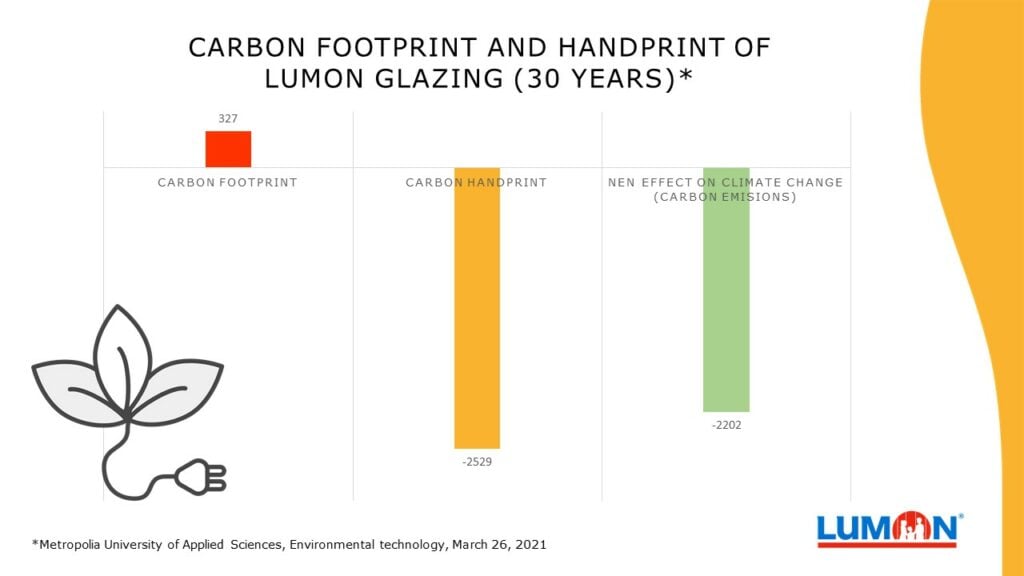
When comparing lifecycle emissions of the Lumon Glazing product with those that have been caused by driving a car, we can state that emissions of the balcony glazing system are comparable to one round trip by car from Helsinki to Northern Lapland. The estimation is based on emissions caused by traffic in 2020, as well as calculations of glazing-related emissions that were presented by Julia Vasberg in her thesis. The average carbon dioxide emissions of passenger cars in traffic use totalled 153.5 g/km at the end of last year, while the lifecycle emissions of the Lumon Glazing product totalled 327 CO2 kg (327 CO2 kg /153.5 g/km =2100 km).
The impact of Lumon Glazing on the environment is net positive
In the conditions in Finland, customer-specific emission compensations of the Lumon Glazing product are more than six times higher than lifecycle carbon dioxide emissions of the product. The outcome stems from Vasberg’s thesis that bases its most important initial data on the doctoral thesis that was drawn up by Kimmo Hilliaho, Doctor of Science in Technology. The lifecycle of the balcony glazing product is 30 years in the study. The study shows that user-specific climatic benefits that are attributable to the Lumon Glazing product during its serviceable life are higher than greenhouse gas emissions that are caused by the product during its entire lifecycle.
The thesis shows that an average payback period of the product was six months longer than the value in the calculation that was drawn up in 2012. This is because the initial assumptions were different. The assumptions are essentially affected by the glass recycling degree, the impacts of the product on energy savings and the heating energy source used by the customer. When estimating benefits and emissions of the glazing system, we can, in every case, rely on the fact that the impact of the Lumon Glazing product on the climate is definitely positive. This is true especially, when other energy-saving benefits attributable to the product have been taken into account. This refers to the protective impact caused by the glazing on the structures, for example.
The reduction of the carbon footprint must continue
Materials make up the most significant portion in the formation of the lifetime carbon footprint of the Lumon Glazing product. Glass, in particular, accounts for over 70 % of the emissions. As a result, we intend to pay special attention to the recycling and reuse of glass in the future, to enable us to continue with our carbon footprint reductions.
The Lumon products not only improve your housing comfort, but also represent such entirely recyclable and sustainable options that help you save energy, and, thus, the environment. Our products will also protect structures of the house, which greatly reduces renovation needs. Providing your balcony with a glazing system is an ecologically smart action. This is the reason why every balcony should be fitted with the glazing.
-
Creating more functional urban homes with balcony glazing in Wrocław
Read more…Modern architecture, functional solutions, and resident comfort are values that increasingly define contemporary residential developments. One example of this approach is the Armii Krajowej 7 project developed by i2 Development in Wrocław, Poland, where Lumon balcony glazing systems were installed. Designed by Chamielec Architekci, the project harmoniously combines modern aesthetics with the functionality of urban living.
-

Lumon Annual review 2025: International growth, new strategy and sustainability milestones
Read more…Lumon Group has published its Annual review 2025, highlighting a year of resilience, strategic renewal, and continued international growth despite challenging market conditions.
In 2025, Lumon maintained stable revenue at EUR 159 million while strengthening its position as the global leader in balcony and terrace glazing solutions. Growth was driven particularly by international markets, with Spain continuing its strong development and North America expanding through strategic partnerships and dealer network growth. -

Frameless vs. framed glazing: which is better for balconies and terraces?
Read more…Choosing glazing for a balcony or terrace is about much more than glass panels. The right solution changes how the space feels, how often it gets used, and even how the entire home looks from the inside and outside.