
Balcony glazing pays back its carbon footprint
19 Septemper 2012
Balcony glazing pays back its carbon footprint on average in 3 years 6 months already
It may take only a couple of years to reduce the carbon footprint for housing on a permanent basis, if the balcony has been furnished with glass panels. According to Ramboll Finland Oy’s study, the payback period for the emissions caused by the Lumon 5-type balcony glazing system during its life cycle is 1,2 – 9,7 years, on average in 3 years 6 months in Canada. The glazed balcony will bring savings in energy, and eventually in emissions. The payback period refers to the length of time required for these emission savings to equal the emissions generated during the product’s life cycle. After this, the balcony glazing’s net emissions will be negative, i.e. net proceeds available.
Lumon has become alert to energy and environmental issues
“Interest in energy savings and the carbon footprint of buildings has lately increased due to the directive guidance on energy efficiency. As a result of this, companies have become aware of these issues and had several studies carried out on the environmental properties of products. Lumon Oy has been alert to these issues at an early stage: an energy savings study was carried out in 2010, and a carbon footprint estimation in the spring of 2012. The former study revealed that balcony glazing saves energy. The latter study showed that the product is also advantageous with regard to the carbon footprint. In a way, the result was no surprise as the main balcony glazing materials, glass and aluminum, are totally recyclable. Another benefit is their existing and functional recycling system. At present, these materials are already successfully recycled,” sums up M.Sc. (Tech.) Kimmo Hilliaho, Energy Specialist and Leader of Research.
The starting point in the study’s carbon footprint estimation was a 64 sqm high-rise apartment in Tampere, Finland. The apartment is equipped with a typical Lumon 5-type balcony glazing system consisting of six glass panes. Thanks to glazing, the example object’s energy savings for the winter of 2009–2010 totaled 4.6 kWh/m2/a, while they amounted to an average of 1.9–10,4 kWh/m2/a in Finland.
Moreover, the study carried out by Ramboll deals with the consideration of the environmentally friendly properties of Lumon solutions when determining the points granted by the globally well-known LEED environmental certification system for properties.
Interview requests:
Olli Vänskä, CEO
Lumon North America Inc.
tel. +1 705 458 3020
fax +1 705 458 3022
toll free tel. 1 855 458 3020
olli.vanska@lumon.com
lumon.com
Kimmo Hilliaho, Energy Specialist
Ramboll Finland Oy
Tel. +358 400 780 909
-
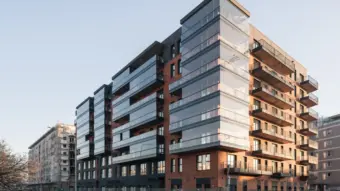
Creating more functional urban homes with balcony glazing in Wrocław
Read more…Modern architecture, functional solutions, and resident comfort are values that increasingly define contemporary residential developments. One example of this approach is the Armii Krajowej 7 project developed by i2 Development in Wrocław, Poland, where Lumon balcony glazing systems were installed. Designed by Chamielec Architekci, the project harmoniously combines modern aesthetics with the functionality of urban living.
-
Lumon Annual review 2025: International growth, new strategy and sustainability milestones
Read more…Lumon Group has published its Annual review 2025, highlighting a year of resilience, strategic renewal, and continued international growth despite challenging market conditions.
In 2025, Lumon maintained stable revenue at EUR 159 million while strengthening its position as the global leader in balcony and terrace glazing solutions. Growth was driven particularly by international markets, with Spain continuing its strong development and North America expanding through strategic partnerships and dealer network growth. -

Frameless vs. framed glazing: which is better for balconies and terraces?
Read more…Choosing glazing for a balcony or terrace is about much more than glass panels. The right solution changes how the space feels, how often it gets used, and even how the entire home looks from the inside and outside.